

Vietnam has rapidly become one of the most attractive destinations for remote professionals seeking affordability, culture, and flexibility. As a digital nomad in Vietnam, you can enjoy a compelling quality of life while maintaining your long-term financial goals.
As a globally experienced financial adviser specialising in wealth management for expats, I regularly speak with foreign clients who are considering Vietnam as a base.
This guide is designed to give you a clear, practical, and financially focused overview of what life looks like as a digital nomad in Vietnam and how to approach it sensibly.
What Is a Digital Nomad and How Is That Different from an Expat?
Before exploring the practicalities of being a digital nomad in Vietnam, it is worth clarifying what the term digital nomad actually means, and how it differs from being an expat.
While the two are often used interchangeably, they describe distinct lifestyles with very different financial implications.
What Is a Digital Nomad?
A digital nomad is someone who earns an income remotely, typically using technology, and chooses to live in different countries without committing to long-term residency in any one place. Most digital nomads work as:
Remote employees for overseas companies
Freelancers or consultants
Online business owners
The defining feature is location independence. A digital nomad might spend three months in Vietnam, six months in Portugal, and the remainder of the year elsewhere. This flexibility is attractive, but it also introduces complexity around tax residency, banking, healthcare, and long-term financial planning.
From my experience advising globally mobile clients, many digital nomads prioritise lifestyle and freedom early on, only to realise later that inconsistent planning can create gaps in pensions, investments, and tax compliance.

What Is an Expat?
An expat (short for expatriate) is someone who lives and works outside their home country on a more long-term or permanent basis. Expats are more likely to:
Hold local employment contracts
Obtain long-term visas or residency permits
Register for local tax and social security systems
Integrate into local financial and legal frameworks
In financial terms, expats usually have clearer residency status, which can simplify tax planning but may increase local obligations.
Key Differences That Matter Financially
| Digital Nomad | Expat |
|---|---|
| Short- to medium-term stays | Long-term or permanent relocation |
| Often paid by overseas clients | Often paid locally |
| Usually non-tax resident locally | Often tax resident locally |
| Highly flexible lifestyle | More stable but less flexible |
| Greater risk of planning gaps | Greater regulatory clarity |
For a digital nomad in Vietnam, the distinction is particularly important. Many nomads remain non-tax residents by staying under the 183-day threshold, whereas expats who settle long term may become subject to Vietnamese tax rules and reporting requirements.
Why the Difference Matters
Understanding whether you are operating as a digital nomad or an expat helps shape:
Your tax residency strategy
How and where you invest
Whether you continue contributing to pensions
How you structure income and savings
In short, the difference can have significant long-term financial consequences. Regardless of which path you take, the key is ensuring your lifestyle choices are supported by a coherent financial plan rather than undermining it.
Why Vietnam Appeals to Digital Nomads
Vietnam consistently ranks as one of the most affordable countries for expats. In the InterNations Expat Insider survey in 2025, Vietnam has been named the number one country globally for affordability.
Also, the cost of living in Vietnam is approximately 55–60% lower than in the United States, and significantly lower than the UK.
Beyond cost, Vietnam offers:
A strong café and coworking culture
Reliable internet infrastructure
Large, established expat communities
A lifestyle that supports work–life balance
For many remote workers, Vietnam provides something rare: the ability to reduce expenses without sacrificing lifestyle, a powerful combination from a financial planning perspective.

Cost of Living as a Digital Nomad in Vietnam
One of the first questions I am asked is: “How much do I realistically need to live comfortably?”
The good news is, the cost of living in Vietnam is very affordable and suitable for digital nomads and expats alike.
Below, I outline typical monthly costs across different types of nomadic living arrangements, from lean and mobile to comfortable long-term stays.
1. Backpacker / Lean Nomad
Best for: Short-term travellers, budget-conscious freelancers, first-time nomads
Accommodation: Shared dorm or basic private room: £160–£280 ($200–$350)
Food & Drink: Street meals and local cafés: £120–£200 ($150–$250)
Transport: Scooter rental or occasional Grab: £80–£145 ($100–$180)
Co-working / Internet: Part-time coworking or café spend: £40–£80 ($50–$100)
Utilities & Mobile Data: Local SIM + data plans: £8–£16 ($10–$20)
Miscellaneous (entertainment, essentials): £65–£120 ($80–$150)
Total estimated monthly cost: £470–£840 ($590–$1,050)
If you’re just dipping your toes in as a digital nomad in Vietnam, this is easily attainable. Many nomads enjoy the basics, working from cafés and budget co-working passes until they decide where to settle.
2. Solo Nomad – Comfortable Urban Lifestyle
Best for: Solo freelancers, remote employees, nomads working full-time
Accommodation: Furnished studio or one-bed apartment in Hanoi/Ho Chi Minh City: £360–£560 ($450–$700)
Food & Drink: Mix of street food, mid-range meals, and occasional Western restaurants: £200–£320 ($250–$400)
Transport: Scooter rental and Grab rides: £95–£175 ($120–$220)
Co-working Space: Dedicated space with desk and meeting access: £80–£120 ($100–$150)
Utilities & Internet: Home internet + mobile: £16–£28 ($20–$35)
Health Insurance (monthly average): £40–£100 ($50–$125)
Extras (gym, social, travel): £120–£240 ($150–$300)
Total estimated monthly cost: £910–£1,460 ($1,140–$1,825)
For many expat digital nomads, this mid-range scenario represents the sweet spot: a comfortable apartment, reliable internet, and space to work effectively.

3. Couple or Two-Person Household
Best for: Partners travelling together, shared expenses, dual nomad household
Accommodation: One-bed or two-bed apartment: £480–£800 ($600–$1,000)
Food & Drink: Shared groceries and meals: £280–£480 ($350–$600)
Transport: One scooter or shared Grab: £120–£200 ($150–$250)
Co-working Space: Two passes: £145–£240 ($180–$300)
Utilities & Internet: £20–£32 ($25–$40)
Insurance (joint, averaged): £72–£160 ($90–$200)
Miscellaneous: £160–£320 ($200–$400)
Total estimated monthly cost: £1,270–£2,235 ($1,595–$2,790)
Sharing costs makes Vietnam particularly attractive for remote couples. Even in a two-person household, living standards can remain high while overall expenses stay comparatively modest.
4. Nomad with Frequent Travel / Longer Stays Across the Region
Best for: Globetrotting nomads using Vietnam as a base
This scenario recognises that many digital nomads on longer visas or e-visas will move between cities (e.g., Hanoi, Da Nang, Ho Chi Minh City) or even travel regionally. Monthly budgets may vary:
Accommodation (rotating cities): £280–£640 ($350–$800) depending on city or short-term rentals
Flights and Border Runs (averaged monthly): £64–£160 ($80–$200)
Food & Lifestyle: £240–£400 ($300–$500)
Co-working Flex Pass: £64–£112 ($80–$140)
Total estimated monthly cost: £650–£1,310 ($810–$1,640)(Note: Travel and accommodation swings reflect mobility.)
This scenario emphasises flexibility and adventure, but from a financial planning perspective it introduces variable cost risk, making budgeting and savings discipline even more important.

Visas and Residency: What You Need to Know
Vietnam does not currently offer a dedicated digital nomad visa. However, recent changes have made entry significantly easier.
Vietnam E-Visa (Updated August 2023)
Available to all nationalities
Valid for 90 days
Multiple entry permitted
Cost:
£20 ($25) single entry
£40 ($50) multiple entry
UK passport holders also benefit from a 45-day visa exemption.
Most digital nomads manage their stay via a combination of e-visas and short trips outside the country. While this remains a legal grey area, it is widely used. For certainty, professional visa advice is always recommended.
Tax Considerations for Digital Nomads in Vietnam
Tax is often the least glamorous part of the digital nomad lifestyle, yet it is arguably the most important to get right. For those considering life as a digital nomad in Vietnam, understanding how Vietnamese tax rules interact with UK or US tax systems is essential to avoid surprises later.
While Vietnam can be tax-efficient for short-term remote workers, the position is not automatic. Your liability depends on time spent in the country, source of income, and your home-country obligations.
Vietnamese Tax Residency: The 183-Day Rule Explained
Vietnam determines tax residency primarily based on physical presence. You are considered a Vietnamese tax resident if either of the following applies:
You spend 183 days or more in Vietnam within a calendar year, or
You have a permanent residence in Vietnam (for example, long-term registered accommodation)
If neither applies, you are treated as a non-resident for tax purposes.
This distinction is critical. Tax residents are taxed on worldwide income, whereas non-residents are only taxed on Vietnam-sourced income.
Example: A UK-based consultant spends four months in Vietnam working remotely for UK clients and then leaves. As they remain under 183 days and have no permanent residence, they are generally treated as a non-resident for Vietnamese tax purposes.

What Counts as Vietnam-Sourced Income?
For most digital nomads, this is where Vietnam remains attractive from a tax perspective.
Vietnamese tax law states that non-residents pay tax only on income sourced within Vietnam, typically at a flat rate of 20%. In practice, income is considered Vietnam-sourced if:
You are employed by a Vietnamese company, or
You provide services to Vietnamese clients, or
You carry out business activities that are clearly based in Vietnam
If you are working remotely for a foreign employer or overseas clients, your income is generally not considered Vietnam-sourced.
Example: A US software developer employed by a US company continues to be paid into a US bank account while living in Da Nang. Provided they remain under the 183-day threshold, Vietnam would not typically tax that income.
This is why many digital nomads in Vietnam have no local tax liability, despite living and working there.
The “Grey Area” for Digital Nomads
It is important to acknowledge that digital nomad taxation in Vietnam exists in a legal grey area. Vietnam does not currently have a formal digital nomad framework, and enforcement for short-term remote workers is limited.
That said:
Working remotely on a tourist or e-visa is widely practised, but not explicitly legislated
Tax enforcement generally focuses on local employment and businesses
Long stays without proper planning increase scrutiny risk
From a financial planning standpoint, ambiguity is not a strategy. If you intend to stay longer, earn significant income, or formalise your presence, professional advice is strongly recommended.
Banking and Currency Management
Managing money across borders is one of the most underestimated challenges of life as a digital nomad in Vietnam. While day-to-day expenses are inexpensive, poor banking and currency decisions can quietly erode savings through fees, unfavourable exchange rates, and inefficient cash management.
With a little structure, however, Vietnam can be an easy country to operate in financially.
Vietnam Is Still a Cash-Heavy Economy
Although card payments are becoming more common in major cities, Vietnam remains predominantly cash-based, particularly for:
Street food and local cafés
Small retailers and markets
Scooter rentals and informal services
Local landlords outside large developments
As a result, digital nomads should expect to withdraw cash regularly and carry Vietnamese dong (VND) for everyday spending.
That said, larger supermarkets, coworking spaces, international gyms, and ride-hailing apps such as Grab typically accept card payments.
Practical tip: Avoid relying solely on cards. Cash shortages or declined foreign cards can quickly become frustrating in daily life.
Opening a Local Vietnamese Bank Account
For short-term stays, many digital nomads operate without a Vietnamese bank account. However, if you plan to stay several months or longer, opening a local account can simplify life considerably.
A local account is useful for:
Paying rent via bank transfer
Utility bills and deposits
Receiving refunds or reimbursements
Avoiding repeated ATM withdrawal fees
That said, opening an account can be administratively inconsistent. Requirements vary by bank and branch, but typically include:
A passport
A valid visa (longer-term visas are more easily accepted)
Proof of local address
Some digital nomads choose to rely on international fintech accounts instead, which leads neatly into the next point.
Managing Currency Risk: GBP and USD vs VND
Vietnamese dong is a relatively stable currency, but it is not one most digital nomads should hold in large amounts long term.
Key considerations:
Daily spending in VND is unavoidable
Income is often earned in GBP or USD
Long-term savings should typically remain in stronger base currencies
Best practice:
Convert only what you need for short-term spending
Avoid holding large idle VND balances
Repatriate surplus funds regularly to GBP or USD accounts
Over time, small exchange losses can compound. Currency discipline is therefore an important, if unglamorous, part of wealth preservation abroad.
ATM Withdrawals, Fees, and Practical Limits
ATM access is widespread in Vietnam, but withdrawal limits and fees vary.
Typical considerations:
Local ATMs often limit withdrawals to 2–5 million VND per transaction (approximately £65–£160 / $80–$200)
Local bank fees are usually modest
Foreign card fees depend on your home bank
Tip: Choose a bank card that:
Reimburses ATM fees, or
Charges no overseas withdrawal fees
This can save hundreds of pounds or dollars over the course of a year.

Paying Rent and Managing Larger Transactions
Rent in Vietnam is often quoted in USD, but paid in VND at the prevailing exchange rate. Some landlords accept bank transfers, while others prefer cash.
When paying rent:
Clarify currency and exchange rate terms upfront
Request written confirmation of payment
Avoid holding excessive cash unnecessarily
For larger transactions, using bank transfers or fintech platforms offers better traceability and security.
Protecting Your Finances While Abroad
Living internationally increases exposure to operational risk. A few sensible precautions go a long way:
Carry at least two bank cards from different providers
Keep emergency funds in a separate account
Enable app-based security and spending alerts
Store card details securely and digitally
From experience, the most stressful financial issues abroad are rarely about investment performance, they are about access to money when something goes wrong.
Healthcare and Insurance Planning
Healthcare costs in Vietnam are low by Western standards, but private international hospitals are strongly recommended.
Routine consultations: £25–£50 ($30–$60)
Comprehensive international health insurance: £480–£1,200 ($600–$1,500) annually
From a financial planning standpoint, insurance is non-negotiable. Medical events are one of the most common causes of unexpected financial strain abroad.
Best Cities for Digital Nomads in Vietnam
Choosing where to live is one of the most consequential decisions you will make as a digital nomad in Vietnam.
Below are the cities most frequently chosen by digital nomads, along with the practical and financial considerations that accompany each.
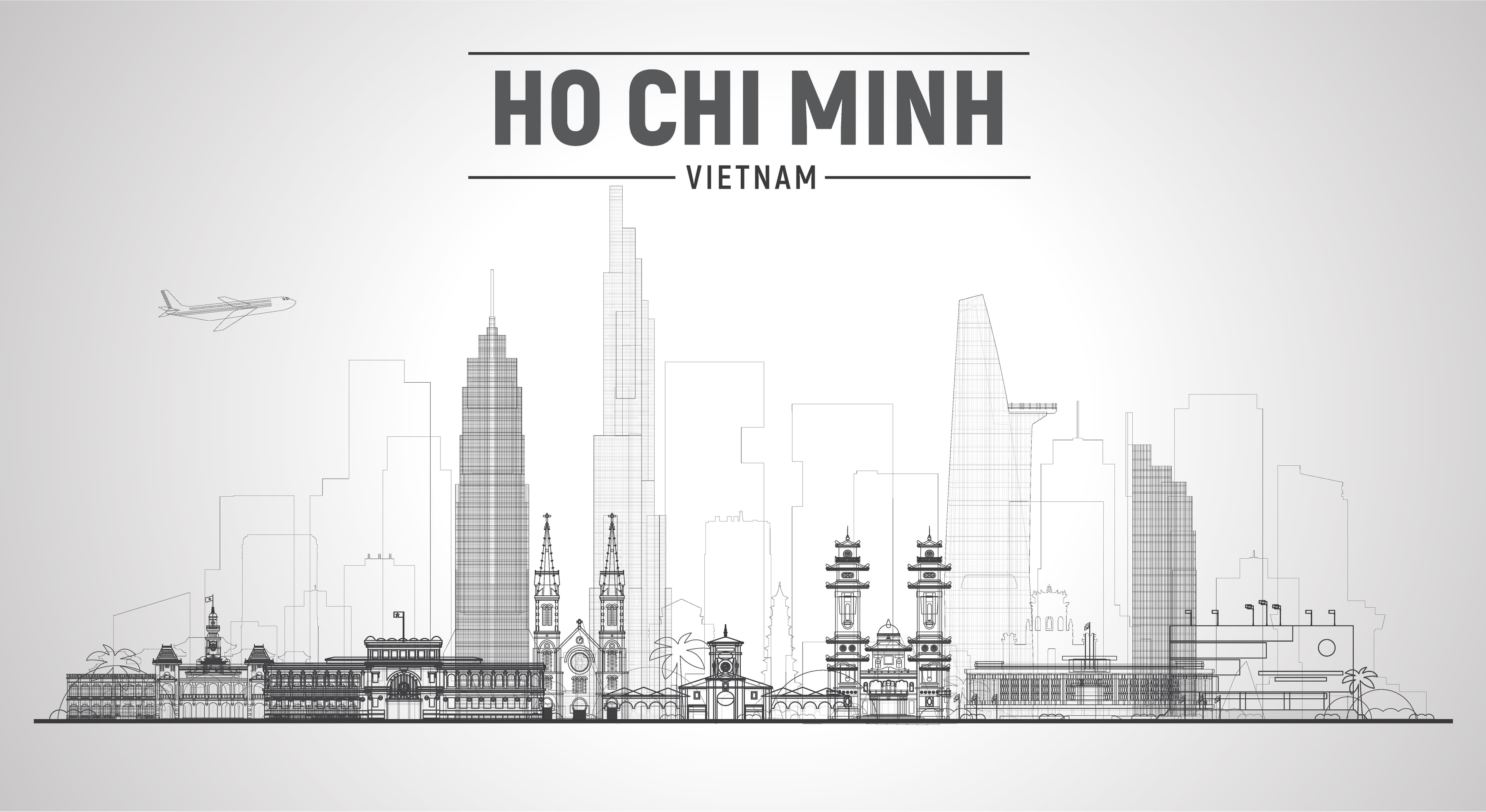
1. Ho Chi Minh City (Saigon): Energy, Opportunity, and Scale
Ho Chi Minh City is Vietnam’s largest and most dynamic metropolis. For digital nomads who thrive on energy, variety, and professional networking, it is often the first choice.
Why digital nomads choose Ho Chi Minh City:
Large international and entrepreneurial community
24-hour cafés ideal for US and UK time zones
Extensive coworking options (Dreamplex, CirCO, The Hive)
Strong infrastructure and healthcare access
Financial considerations:
Higher rents than elsewhere in Vietnam
Studio apartments typically cost £360–£560 ($450–$700)
Monthly living costs often range from £1,120–£1,600 ($1,400–$2,000)
Popular neighbourhoods such as District 1, Thao Dien (District 2), and Phu My Hung (District 7) cater particularly well to expats and digital professionals. While costs are higher, productivity and convenience are often superior.
2. Hanoi: Culture, Character, and Cost Efficiency
Hanoi offers a more traditional and reflective pace of life compared to Ho Chi Minh City. Many digital nomads are drawn to its cultural depth and slightly lower cost base.
Why digital nomads choose Hanoi:
Rich history and vibrant street life
Cooler climate (by Vietnamese standards)
Strong café culture and growing coworking scene
Easy access to northern Vietnam destinations
Financial considerations:
Rents slightly lower than Ho Chi Minh City
Comfortable apartments in Tay Ho range from £320–£520 ($400–$650)
Typical monthly spend: £960–£1,360 ($1,200–$1,700)
Areas such as Tay Ho (West Lake) are particularly popular with expats, offering more space and a calmer environment than the Old Quarter, which can feel tourist-heavy for long-term living.
3. Da Nang: Balance, Beach, and Liveability
Da Nang is frequently cited as Vietnam’s most liveable city, and with good reason. It strikes an appealing balance between modern infrastructure, affordability, and lifestyle.
Why digital nomads choose Da Nang:
Beachfront living without major city congestion
Reliable internet and modern apartments
Active expat and coworking communities
Slower pace with strong work–life balance
Financial considerations:
Lower rents than Hanoi or Ho Chi Minh City
One-bed apartments often cost £280–£480 ($350–$600)
Comfortable monthly budgets from £800–£1,200 ($1,000–$1,500)
Neighbourhoods such as My An and Son Tra are particularly popular. From a financial planning standpoint, Da Nang allows many digital nomads to extend their runway while maintaining excellent quality of life.
4. Hoi An: Creativity, Calm, and Focus
Hoi An appeals to digital nomads who prioritise creativity, wellbeing, and slower living. It is especially popular with writers, designers, and consultants seeking focus.
Why digital nomads choose Hoi An:
Beautiful historic town with relaxed atmosphere
Excellent cafés and boutique coworking spaces
Close proximity to Da Nang for flights and services
Financial considerations:
Limited housing stock can increase prices in peak seasons
Typical living costs: £720–£1,120 ($900–$1,400)
Best suited for shorter stays or off-peak months
Hoi An is ideal for those who already have stable income streams and value quality of life over scale or networking.
5. Nha Trang: Coastal Living with Urban Convenience
Nha Trang offers beachside living with more infrastructure than many smaller coastal towns. It remains slightly under the radar compared to Da Nang.
Why digital nomads choose Nha Trang:
Strong transport links and amenities
Scenic coastline and relaxed pace
Affordable housing near the beach
Financial considerations:
Monthly costs generally sit between £800–£1,280 ($1,000–$1,600)
Good option for those seeking long-term coastal living
While coworking options are fewer, many nomads work effectively from apartments and cafés with stable internet connections.
Creating a Budget Plan as a Digital Nomad
Creating a robust budget is one of the most important financial disciplines for any digital nomad.
Unlike traditional household budgeting, a digital nomad’s plan must accommodate variable income, changing locations, currency differences, and evolving priorities.
The most effective approach is therefore to budget by scenario, adjusting structure rather than starting from scratch each time your circumstances change.

Scenario 1: Lean or Short-Term Digital Nomad
This scenario suits nomads who are testing the lifestyle, travelling frequently, or prioritising flexibility over comfort. Income may be variable, and accommodation is often short-term or shared.
Budgeting here should focus on keeping fixed costs low and maintaining a strong cash buffer.
The priority is financial resilience, not optimisation.
Budgeting guidance:
Keep accommodation flexible and avoid long-term commitments
Base spending on conservative income assumptions
Maintain higher liquidity for travel, visas, and transitions
Example Monthly Budget – Lean Digital Nomad:
| Expense Category | Monthly Cost |
|---|---|
| Accommodation | £240 ($300) |
| Food & Groceries | £160 ($200) |
| Transport | £95 ($120) |
| Internet & Mobile | £12 ($15) |
| Coworking / Cafés | £48 ($60) |
| Insurance | £40 ($50) |
| Leisure & Miscellaneous | £65 ($80) |
| Travel & Visas (avg.) | £80 ($100) |
| Savings / Buffer | £120 ($150) |
| Total | £860 ($1,075) |
This type of budget works well for nomads earning irregular income, provided they resist lifestyle inflation during higher-income months.
Scenario 2: Solo Digital Nomad (Comfort-Focused)
This is the most common scenario among established digital nomads in Vietnam. Income is generally stable, work is full-time, and comfort and productivity are prioritised. Budgeting here should strike a balance between lifestyle enjoyment and consistent wealth building.
The key objective is predictability and automation.
Budgeting guidance:
Cap housing costs at 30–35% of net income
Treat savings and investing as fixed monthly expenses
Budget explicitly for leisure to avoid overspending
Example Monthly Budget – Solo Comfort-Focused Nomad:
| Expense Category | Monthly Cost |
|---|---|
| Accommodation | £480 ($600) |
| Food & Groceries | £280 ($350) |
| Transport | £145 ($180) |
| Internet & Mobile | £20 ($25) |
| Coworking Space | £96 ($120) |
| Insurance | £72 ($90) |
| Gym & Leisure | £145 ($180) |
| Travel & Visas (avg.) | £120 ($150) |
| Savings / Investments | £480 ($600) |
| Total | £1,835 ($2,295) |
For many professionals, this scenario allows saving or investing 30–40% of income without sacrificing quality of life.
Scenario 3: Digital Nomad Couple or Two-Person Household
Couples benefit from shared costs, particularly for accommodation, but budgeting requires coordination and clarity. Financial friction often arises not from cost, but from mismatched expectations.
The goal is alignment and transparency.
Budgeting guidance:
Create a joint household budget for shared expenses
Maintain individual discretionary spending allowances
Agree on shared savings and investment goals
Example Monthly Budget – Nomad Couple:
| Expense Category | Monthly Cost |
|---|---|
| Accommodation | £680 ($850) |
| Food & Groceries | £440 ($550) |
| Transport | £175 ($220) |
| Internet & Mobile | £24 ($30) |
| Coworking (2 passes) | £160 ($200) |
| Insurance | £120 ($150) |
| Leisure & Fitness | £200 ($250) |
| Travel & Visas (avg.) | £160 ($200) |
| Joint Savings / Investing | £720 ($900) |
| Total | £2,680 ($3,355) |
When structured properly, couples often enjoy a higher standard of living and a higher combined savings rate than solo nomads.
Scenario 4: Location-Flexible or Slow-Travel Nomad
Some digital nomads use Vietnam as a base while moving between cities or neighbouring countries. Costs fluctuate month to month, so budgeting should focus on smoothing volatility rather than precision.
The emphasis here is cash flow management.
Budgeting guidance:
Average annual travel costs into a monthly figure
Maintain a larger emergency buffer
Keep fixed costs low to absorb movement
Example Monthly Budget – Location-Flexible Nomad (Averaged):
| Expense Category | Monthly Cost |
|---|---|
| Accommodation (avg.) | £400 ($500) |
| Food & Groceries | £320 ($400) |
| Transport | £120 ($150) |
| Internet & Mobile | £16 ($20) |
| Coworking / Flexible Passes | £80 ($100) |
| Insurance | £72 ($90) |
| Leisure | £120 ($150) |
| Flights & Border Runs (avg.) | £145 ($180) |
| Savings / Buffer | £320 ($400) |
| Total | £1,670 ($2,090) |
This approach avoids the financial stress that often accompanies irregular travel spending.
How to Use These Budgets Effectively
These examples are planning frameworks, not rigid prescriptions. Readers should:
Choose the scenario closest to their current or intended lifestyle
Adjust accommodation and savings first, as they have the largest impact
Rebuild the budget when income structure or city changes
From a financial planning perspective, the most powerful insight is this: Vietnam enables many digital nomads to fund both present lifestyle and future security at the same time, but only with intentional budgeting.
Long-Term Financial Planning as a Digital Nomad
Living as a digital nomad in Vietnam offers an enviable mix of affordability, flexibility, and lifestyle freedom. However, without structure, that freedom can slowly undermine long-term financial security.
The following steps outline how to build a resilient financial framework that supports both your present lifestyle and your future goals.
Step 1: Establish a Clear Financial “Home Base”
Even when you live and work across borders, your finances need a clear centre of gravity. A financial home base determines which tax system you primarily deal with, where your main assets sit, and which rules apply to your long-term planning.
Without this clarity, digital nomads often accumulate fragmented accounts across jurisdictions, increasing complexity and compliance risk over time.
Instructions:
Decide which country remains your primary financial anchor (commonly the UK or US)
Centralise core banking, investment, and retirement accounts there
Limit additional accounts to those that serve a clear operational purpose
Insight:
Mobility works best when administration stays simple
A clear home base reduces reporting errors and administrative fatigue

Step 2: Separate Lifestyle Spending from Long-Term Wealth
One of the most common financial mistakes digital nomads make is treating savings and investments as leftover money rather than deliberate priorities. Lower living costs in Vietnam can create surplus cash, but without structure, that surplus often disappears.
Clear separation between spending and wealth-building is essential.
Instructions:
Use separate accounts for:
Day-to-day spending
Emergency savings (3–6 months of expenses)
Long-term investments and retirement
Automate transfers into savings and investments monthly
Review spending patterns quarterly, not emotionally week to week
Example: A digital nomad earning in USD who spends $1,200 (£960) per month in Vietnam could automatically divert $800 (£640) into investments before lifestyle upgrades creep in.
Step 3: Maintain Consistent Pension and Retirement Contributions
Retirement planning does not pause simply because you change location. In fact, nomadic professionals often have greater responsibility to self-manage retirement due to the absence of employer-sponsored schemes.
Continuity is far more important than contribution size in any single year.
Instructions:
Maintain eligibility and contributions to home-country pension vehicles
Align contributions with long-term targets rather than short-term income fluctuations
Review contribution levels annually as income stabilises or grows
Key considerations:
UK nomads: SIPPs remain a flexible and portable option
US nomads: IRAs and Solo 401(k)s require careful coordination with earned income rules

Step 4: Invest with Portability and Flexibility in Mind
As a digital nomad, your investment strategy must remain functional across borders. Products tied too closely to one country or residency status can become restrictive or inefficient over time.
Portability ensures your investments continue working regardless of where life takes you.
Instructions:
Focus on globally diversified portfolios
Avoid investments that rely on continued residency in one jurisdiction
Regularly review whether platforms remain accessible internationally
Insight:
The best investment strategies are boring, consistent, and adaptable
Complexity rarely improves outcomes for mobile professionals
Step 5: Build a Robust Risk Management Framework
Risk management is often overlooked until something goes wrong. For digital nomads, the consequences of inadequate protection can be magnified due to distance from home systems and support networks.
Insurance should be viewed as a financial foundation, not an optional extra.
Instructions:
Secure comprehensive international health insurance
Ensure policies cover multiple countries and frequent travel
Reassess coverage annually or after major lifestyle changes

Step 6: Approach Tax Planning Proactively and Systematically
Low local tax exposure in Vietnam can be beneficial, but only if it is managed intentionally. Digital nomads who fail to track residency days or understand home-country rules often encounter issues years later.
Tax planning should support long-term efficiency and compliance.
Instructions:
Track days spent in each country meticulously
Maintain clear records of income sources and payment locations
Review tax residency annually with a qualified adviser
Example: A UK-based digital nomad may avoid Vietnamese tax but still trigger UK residency if UK ties remain strong, a situation that requires careful advance planning.
Step 7: Define Long-Term Goals Beyond the Nomad Phase
Digital nomadism is a powerful phase, but rarely a permanent one. Long-term planning works best when anchored to a broader vision, even if the details evolve.
Knowing your direction helps guide investment, savings, and lifestyle decisions.
Instructions:
Identify medium- and long-term objectives (5–20 years)
Consider future residency, family plans, and lifestyle preferences
Revisit goals every 12–24 months as priorities shift
Start Building Financial Security While Living Abroad
Being a digital nomad in Vietnam can be both financially and personally rewarding.
With the right approach to tax, banking, insurance, and long-term investment planning, Vietnam can become more than just a temporary base; it can be a powerful chapter in your broader financial journey.
If you are considering working abroad or already living overseas, I would encourage you to seek advice that reflects both global experience and local nuance. Planning properly today can make all the difference tomorrow.
Contact our team today to get a free consultation!