

As a globally experienced financial adviser working closely with expat families, I am often asked about education planning. Over the last decade, higher education in Vietnam has evolved into a credible and increasingly attractive option for expat and international families, particularly those from the Western countries such as the UK and the US.
Vietnam’s combination of strong economic growth and rising international partnerships has created a higher education landscape that deserves serious consideration. However, as with any major life decision, understanding the financial implications is essential.
This guide is designed to provide expat parents and international students with a clear, practical overview of higher education in Vietnam, while also addressing the key financial considerations that families should factor into their long-term planning.
Why Higher Education in Vietnam Is Gaining International Attention
Vietnam has positioned itself as one of Southeast Asia’s fastest-developing education markets.
According to Vietnam’s Ministry of Education and Training (MOET), participation in foreign-linked higher education programmes has continued to grow steadily since regulatory reforms were introduced in 2018 (such as Decree No. 86/2018/ND-CP), with tens of thousands of students now enrolled in international or joint-degree programmes by the mid-2020s.

Several structural trends explain this growth:
Improved regulation and quality control following the Law on Higher Education and subsequent decrees
Rising middle-class wealth and demand for international qualifications
Cost-efficiency, particularly when compared with studying in the UK, US or Australia
In-country international degrees, reducing the emotional and financial strain of overseas relocation
For expat families already living in Vietnam, or those considering a regional base in Asia, higher education in Vietnam can offer a compelling balance between quality, lifestyle, and financial efficiency.
Types of Higher Education Options in Vietnam
Understanding the structure of higher education in Vietnam is the first step in evaluating suitability and cost.
1. International Branch Campuses
These are physical campuses operated by foreign universities within Vietnam. Degrees are awarded by the overseas institution and typically taught entirely in English.
Examples include:
RMIT University Vietnam (Australia)
British University Vietnam (UK-linked)
These institutions usually follow Western academic standards and assessment frameworks, making them particularly attractive to UK and US families.

2. Joint Training Programmes (Transnational Education)
Joint programmes involve Vietnamese universities partnering with overseas institutions. Students complete all or most of their studies in Vietnam but receive a foreign degree.
As of the mid-2020s, MOET reports over 400 licensed joint programmes, though quality can vary significantly. Careful due diligence is essential, particularly around global rankings and accreditation.
Key International Universities in Vietnam (2026 Snapshot)
Below are some of the most established international providers in higher education in Vietnam, with indicative annual tuition fees.
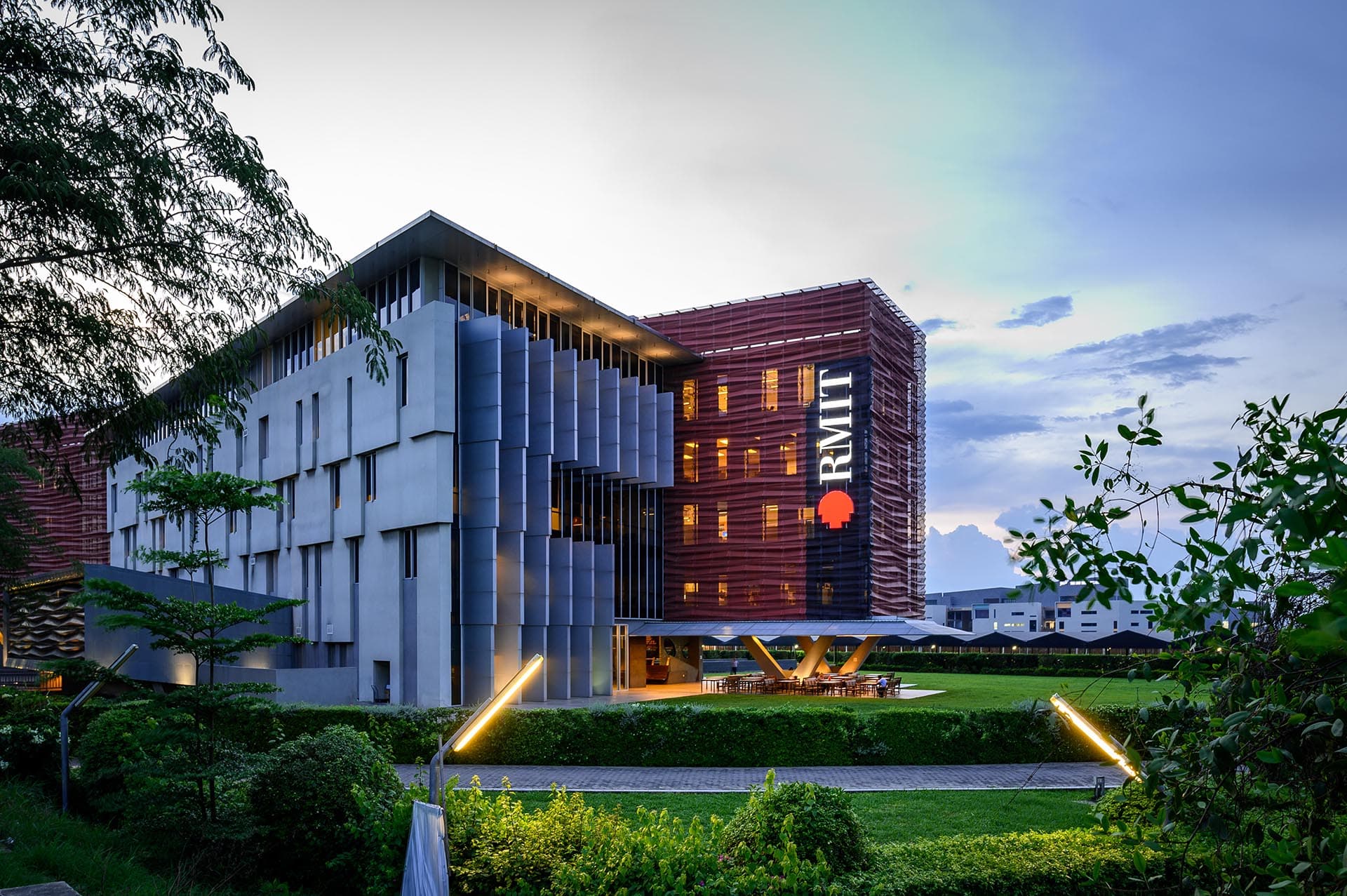
1. RMIT University Vietnam (Royal Melbourne Institute of Technology)
RMIT University Vietnam is the Vietnamese branch of the Royal Melbourne Institute of Technology (RMIT), a well-regarded Australian university ranked within the top 125 globally in the 2026 QS World University Rankings for certain subject areas.
Students study the same curriculum as their counterparts in Australia and receive an RMIT-Melbourne degree on completion.
Overview
Disciplines: Business, Technology, Design, Communication
Global ranking: Typically within QS Top 350
Annual tuition: approximately £10,000–£10,500 ($12,500–$13,200)
Graduate outcomes: RMIT consistently reports employment rates above 90% within 12 months
Campuses and Student Body
Established in 2000, RMIT Vietnam has grown into one of the most established international campuses in Southeast Asia, with two major campuses in Ho Chi Minh City and Hanoi, and a foreign language centre in Da Nang.
The university community includes thousands of students from across the region, and it regularly earns educational excellence awards from the Vietnamese government.
Academic Portfolio
RMIT offers a broad range of undergraduate and postgraduate programmes across business, science and technology, engineering, design, media and communication.
Students benefit from industry-focused and practical learning, with some programmes offering internships and work-integrated learning opportunities to boost employability.
Tuition and Costs
Annual tuition at RMIT Vietnam generally sits higher than some other international programmes due to its strong global brand and comprehensive curriculum, often around £10,000–£11,500 ($12,500–$14,000) per year at undergraduate level, depending on the course.
Student Experience
The university’s approach emphasises creativity, critical thinking and global exposure, making it a strong option for students aiming to work internationally or pursue postgraduate study overseas. Facilities include modern design labs, digital hubs, and career support services.
2. British University Vietnam (BUV)
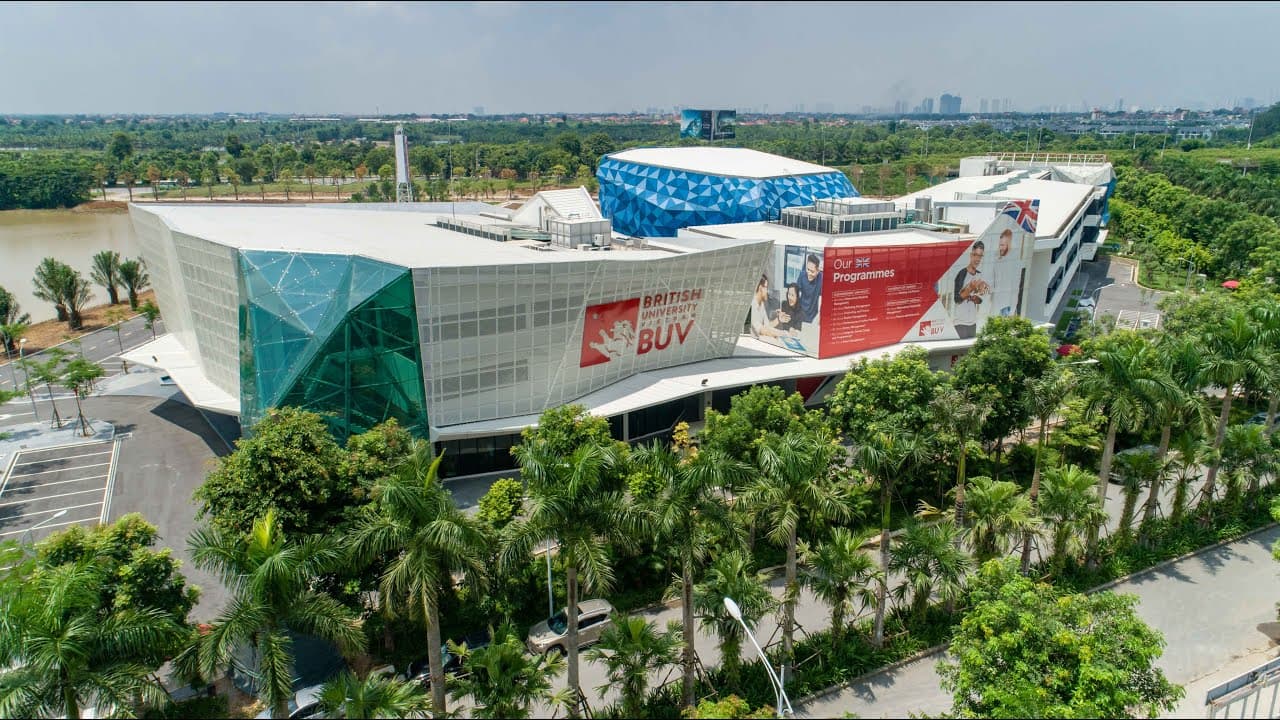
British University Vietnam is a private international university that brings UK-style higher education directly into Vietnam. It was founded in 2009 and has since become one of the country’s most modern and academically ambitious institutions.
Overview
Awarding bodies: University of London, University of Staffordshire
Disciplines: Business, Finance, Technology
Annual tuition: approximately £8,000–£8,500 ($10,000–$10,700)
Notable strength: strong internship and corporate partner network
Global Recognition and Accreditation
BUV achieved five-star QS certification, which is the first in Vietnam and the broader ASEAN region, reflecting excellence in teaching, facilities, employability, and academic development.
It is also accredited through the UK’s Quality Assurance Agency (QAA).
Degree Pathways and Partnerships
Unlike many joint programmes, BUV offers degrees directly awarded by UK partners including:
University of London
Staffordshire University
University of Stirling
Arts University Bournemouth
Bournemouth University
Manchester Metropolitan University
This network allows students to graduate with UK-recognised qualifications while learning in Vietnam.
Curriculum and Structure
Programmes span business, computing, communications, media, visual arts, hospitality and more, delivered in English by internationally qualified faculty. BUV’s campus, located in the Ecopark township near Hanoi, was built to international standards with extensive facilities to support learning and student life.
Career Outcomes
BUV places strong emphasis on employability: many students undertake internships from early in their degree, and the university reports high graduate placement rates or progression to further study within months of graduation.
3. Swinburne Vietnam (via FPT University)
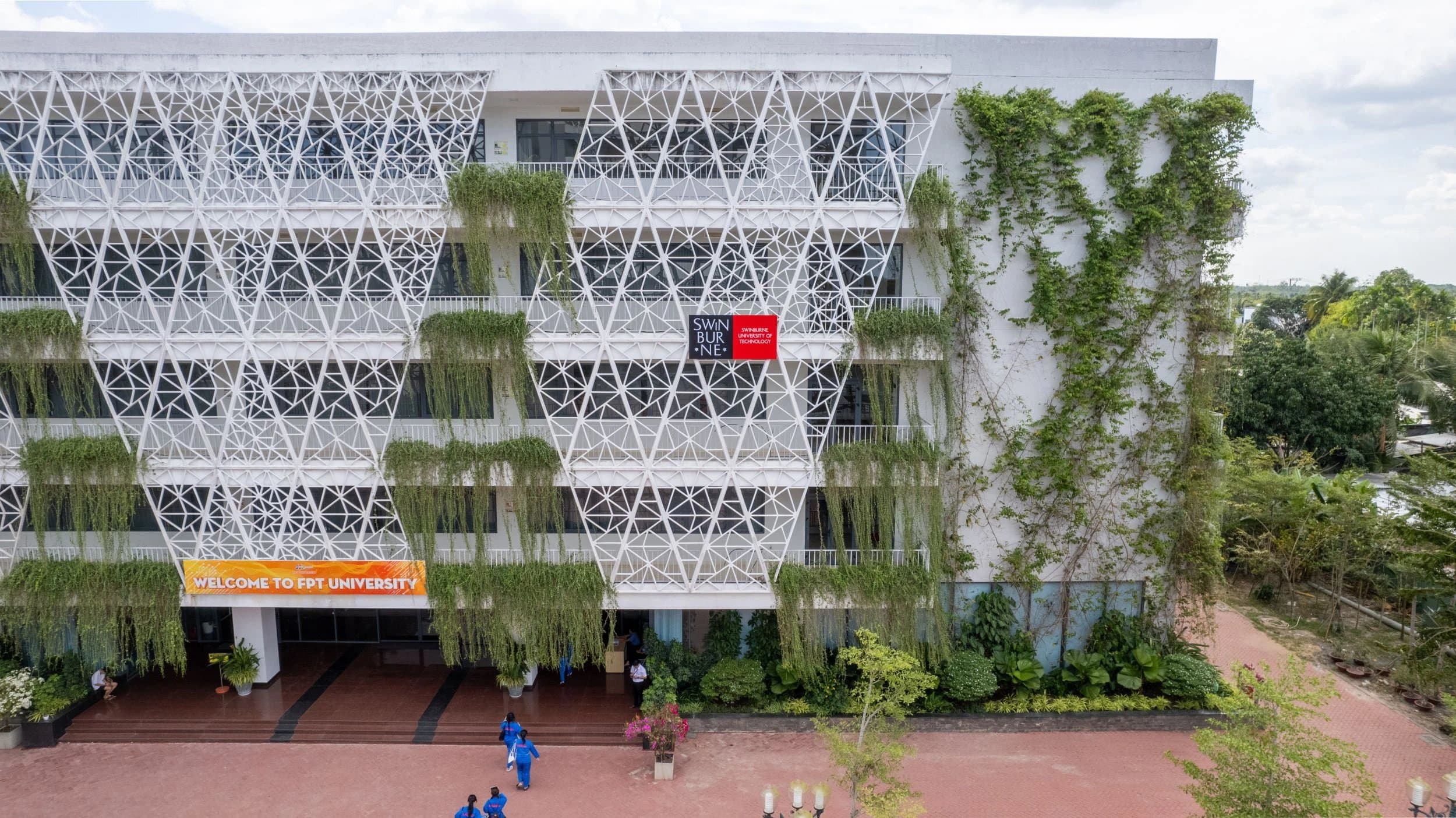
Swinburne Vietnam is not a standalone campus but a strategic alliance between Australia’s Swinburne University of Technology and Vietnam’s FPT University. Students study in Vietnam but graduate with the same degree they would receive if they studied in Australia.
Overview
Disciplines: Business, Media, Technology
Annual tuition: approximately £5,000–£5,300 ($6,300–$6,700)
Value proposition: lower cost with Australian-accredited degree
Global Standing
Swinburne University of Technology is ranked within the top 300 globally in the 2026 QS World University Rankings, giving strong international credibility to its Vietnam-based programmes.
Academic Focus
The Swinburne Vietnam Alliance offers a range of undergraduate options across:
Business and management
Information technology (including AI, IoT, software development and data science majors)
Media, communication and design
These align with sectors that are experiencing rapid growth globally, which can enhance post-graduation career prospects.
Flexibility and Mobility
Students can complete their entire degree in Vietnam or opt to transfer to a Swinburne campus abroad, with credits recognised across institutions, a useful feature for those who may want part of their education in Australia or elsewhere.
Location and Lifestyle
Swinburne Vietnam operates in multiple cities, including Hanoi, Ho Chi Minh City and Da Nang, giving students and families flexibility depending on preferred location and lifestyle in Vietnam.
These fees sit well below equivalent programmes in the UK, where annual tuition alone can exceed £9,250 ($11,700) for domestic students and £20,000–£38,000 ($25,000–$48,000) for international students.
Cost of Living: A Major Financial Advantage
One of the most compelling reasons expat families and international students consider higher education in Vietnam is the significantly lower cost of living compared with Western education destinations.
When assessed holistically, Vietnam offers an environment where students can live comfortably and safely without excessive financial pressure.
1. Accommodation: Flexible Options to Suit Different Budgets
Accommodation is typically the largest non-tuition expense, yet Vietnam offers a wide range of choices that allow families to control costs without compromising on quality or security.
Most international students choose between:
University-managed student housing, where available
Private serviced apartments or shared flats near campus
In major cities such as Ho Chi Minh City or Hanoi, a student can expect annual accommodation costs of approximately £2,000–£4,000 ($2,500–$5,000).
To put this into perspective:
A shared apartment within 20–30 minutes of campus may cost as little as £170–£250 ($215–$320) per month
A modern studio apartment in a central or expat-friendly district may range from £300–£450 ($380–$570) per month
Importantly, leases in Vietnam are often more flexible than in Western countries, with fewer long-term commitments and lower upfront deposits.
For expat families, this flexibility allows accommodation costs to be adjusted annually in line with changing needs or currency conditions.

2. Food and Transport: Low Daily Costs with High Quality of Life
Beyond accommodation, Vietnam’s affordability becomes even more apparent in everyday living expenses. Food and transport costs are particularly low, while quality and convenience remain high.
On average, students spend around £1,500–£2,500 ($1,900–$3,200) per year on food and transport combined.
Food costs are modest due to:
Inexpensive local meals (£1.50–£3.00 / $2–$4 per meal)
Affordable groceries and fresh produce
Widespread availability of international food options at moderate premiums
For example:
A student eating mainly local food may spend £100–£150 ($125–$190) per month
A more Western-style diet may increase this to £180–£220 ($230–$280) per month
Transport costs are similarly manageable:
App-based motorbike taxis (Grab, Be) often cost £0.80–£2.00 ($1–$2.50) per journey
Monthly transport spending typically remains below £40–£60 ($50–$75)
As a result, students enjoy a high degree of mobility and independence without the need for a car, something that significantly reduces financial pressure compared with many Western cities.
3. Health Insurance and Miscellaneous Costs: Predictable and Manageable
Healthcare and incidental expenses are often areas of concern for international families. Fortunately, these costs in Vietnam are both predictable and comparatively low.
Most international universities require students to hold private health insurance, either through the institution or a recognised local or international provider. Annual premiums typically range from £500–£800 ($650–$1,000), depending on coverage levels.
This usually includes:
Access to international-standard hospitals in major cities
Outpatient and emergency care
Optional dental or specialist add-ons
In addition, students should budget for:
Mobile phone plans (£5–£10 / $6–$13 per month)
Study materials and technology
Leisure, fitness, and social activities
Even with these additional expenses included, total “miscellaneous” costs tend to remain modest when compared with student life in the UK or US.

Total Annual Living Costs: A Practical Illustration
When viewed together, most international students in Vietnam can live comfortably on £4,000–£7,000 ($5,000–$9,000) per year, excluding tuition.
By contrast:
Living costs alone in London or New York often exceed £12,000–£18,000 ($15,000–$23,000) annually
These figures do not include tuition, which further widens the cost gap
For expat families planning for more than one child, the cumulative savings over a three- or four-year degree can be substantial. From a financial planning perspective, this difference can free up capital for postgraduate study, property planning, or long-term investment strategies.
Financial Planning Considerations for Expat Families
While higher education in Vietnam offers meaningful cost advantages, those benefits are best realised when education planning is aligned with a broader financial strategy rather than approached as a stand-alone expense.
Below are the key financial considerations I encourage expat families to address early and proactively.
1. Currency Planning: Managing Exchange Rate Risk Over Time
One of the most overlooked risks in international education planning is currency fluctuation. Tuition fees at international universities in Vietnam are typically denominated in US dollars, while family income may be earned in pound sterling, US dollars, or another foreign currency.
Over a three- or four-year degree, even modest exchange rate movements can materially affect total education costs.
For example:
A 10% weakening of GBP against USD could increase tuition costs by several thousand pounds over the course of a degree
Families relying on annual transfers may face budgeting uncertainty year to year
To manage this risk effectively, families should consider:
Holding education funds in the same currency as tuition liabilities
Phasing currency conversions over time rather than transferring large sums at once
Aligning education cash flow with broader investment and income planning
From a financial planning perspective, this is mainly about reducing uncertainty and improving predictability, particularly for families with more than one child approaching university age.

2. Education Savings Versus Investment: Avoiding the Inflation Trap
Many families instinctively hold education funds in cash accounts. While this feels safe, it often leads to loss of purchasing power, especially over medium-term horizons of five to ten years.
Education costs, even in affordable destinations like Vietnam, tend to rise faster than general inflation. Holding funds entirely in cash exposes families to:
Education fee inflation
Currency depreciation
Opportunity cost from foregone investment returns
A more structured approach may involve:
Separating education funds into short-, medium-, and long-term segments
Holding near-term costs in lower-risk instruments
Allowing longer-dated education funding to benefit from measured investment exposure
The objective is not to take unnecessary risk, but rather to ensure education funding grows in line with future costs. When managed properly, this approach can reduce the total financial burden while preserving flexibility.
3. Cash Flow Planning: Matching Income, Fees, and Family Commitments
Unlike domestic education, international higher education introduces cross-border cash flow complexity. Tuition may be payable annually or per semester, while income streams may be irregular, bonus-based, or linked to overseas employment.
Effective planning involves:
Mapping tuition and living costs across the full duration of study
Stress-testing affordability against changes in employment or location
Ensuring adequate liquidity without disrupting long-term investments
For expat families, education planning should be coordinated with:
Housing decisions
Pension contributions
Insurance coverage
Emergency reserves
By treating education as part of a wider financial ecosystem, families avoid reactive decisions and preserve financial stability even during periods of transition.

4. Opportunity Cost: Using Savings Strategically
One of the most powerful advantages of higher education in Vietnam is the opportunity cost saving compared with Western alternatives.
When tuition and living costs are reduced by 40–70%, families gain flexibility in how capital is deployed elsewhere.
Those savings can be redirected towards:
Postgraduate or professional qualifications
Property acquisition or mortgage reduction
Long-term investment and retirement planning
Supporting younger siblings through education
From a strategic standpoint, this flexibility can significantly improve long-term financial outcomes, particularly for internationally mobile families who value optionality.
5. Multi-Child and Multi-Jurisdiction Planning
For families with more than one child, education planning must be scalable. Decisions made for the first child often set a precedent, financially and emotionally, for the rest of the family.
Key considerations include:
Whether education funding structures can support multiple degrees concurrently
How future currency exposure compounds over time
Whether children may study in different countries
Planning early allows families to avoid reactive decisions and instead build a cohesive, repeatable strategy that adapts as circumstances evolve.

6. Education as Part of a Broader Wealth Strategy
Ultimately, education should not undermine long-term financial security. Too often, I see expat families prioritise education funding at the expense of pensions, investments, or future independence.
A well-constructed plan ensures that:
Children receive high-quality education
Parents maintain momentum towards their own financial goals
Capital is allocated intentionally rather than emotionally
This is where professional guidance can be particularly valuable, helping families balance aspirations today with sustainability tomorrow.
The Future of Higher Education in Vietnam
Vietnam’s government continues to promote international collaboration while tightening quality standards. Looking ahead to the late 2020s, I expect:
Continued growth in UK and Australian-linked universities
Greater regulatory oversight
Improved graduate employability and industry partnerships
For expat families already based in Asia, higher education in Vietnam is no longer a compromise, it is increasingly a strategic choice.
How I Help Expat Families Plan and Fund Education with Confidence
Providing for your children’s education is one of the most meaningful investments you will ever make. For expat families and internationally mobile professionals, that decision is often more complex.
This is where structured education fee planning becomes essential.
Education Planning as Part of a Broader Financial Strategy
As a globally experienced financial adviser specialising in wealth management for expat clients, I approach education planning not in isolation, but as part of a cohesive long-term financial strategy.
Education costs continue to rise globally, with long-term averages increasing at around 5% per annum. Over time, this means families may need to double or even treble today’s education cost estimates to meet future requirements, particularly if overseas or international education is involved.
When planning is delayed, families are often forced into reactive decisions. When planning starts early, options widen considerably.

Helping You Assess the True Cost of Education
One of the first steps I take with clients is helping them understand the full financial picture. Education costs extend well beyond headline tuition fees and often include:
Boarding school fees, which can exceed £20,000 ($25,000) per year
University tuition, frequently reaching five-figure sums annually
Additional expenses such as books, technology, uniforms, accommodation, insurance, and travel
The total cost of education varies significantly depending on:
The institution selected
The course and academic pathway
The country and city of study
Whether the student is classed as domestic or overseas
By modelling these variables early, families gain clarity and avoid unpleasant financial surprises later on.
Using Offshore Savings and Investment Solutions Effectively
One of the advantages many expats overlook is their access to offshore saving and investment structures. When used correctly, these can offer:
Tax-efficient or tax-free growth, depending on jurisdiction
Portability if you relocate or return home
Flexible access for tuition payments
Investment adaptability as circumstances change
Rather than holding education funds in cash, I help clients position money in a way that allows it to grow over time while remaining accessible when fees fall due.
This approach can significantly reduce the long-term financial strain of education funding, particularly for families with multiple children.

A Proactive, Personal Approach
As an expat myself, I understand the pressures of making long-term decisions in an ever-changing international environment. My approach is pragmatic, proactive, and collaborative. Education planning should empower families, not restrict them.
Whether you are:
Planning for school-age children,
Funding higher education in Vietnam or elsewhere, or
Balancing education costs alongside investment and retirement planning,
I work with you to build a solution that adapts as your family and circumstances evolve.
Taking the Next Step in Education Planning
Higher education in Vietnam offers a unique intersection of affordability, international credibility, and lifestyle benefits but it must be approached with clear financial structure and informed decision-making.
If you are considering higher education in Vietnam for your child, professional guidance from experienced financial advisers such as Benjamin Sharvell IFA can make a meaningful difference.
Get in touch with our team today for a free consultation!