

Ho Chi Minh City has become one of Southeast Asia’s most appealing destinations for international retirees. With its warm climate, excellent healthcare options, dynamic food culture, and relatively low cost of living, it offers an attractive lifestyle for those looking to enjoy their retirement abroad.
Ho Chi Minh City is vast and wonderfully diverse. Each district has its own character, amenities, and pace of life. Some are vibrant and cosmopolitan, while others offer a quieter, community-focused environment that many retirees prefer.
In this guide, I’ll walk you through the best districts in Ho Chi Minh City for expat retirees in 2026, helping you understand where you might feel most at home.
Key Takeaways
Most expats cluster in a handful of areas: Thao Dien (the former District 2, now Thu Duc City) and Phu My Hung (District 7) are the two biggest expat hubs.
For families: Thao Dien and Phu My Hung, for their international schools, green space and larger homes.
For city living: District 1 (central and lively) or District 3 (central but calmer and characterful).
For value: Binh Thanh, District 4 and Phu Nhuan offer lower rents with good access to the centre.
The most upmarket addresses are in District 1, the emerging Thu Thiem area, and the established enclaves of Thao Dien and Phu My Hung.
Why Ho Chi Minh City Appeals to Expat Retirees
Before exploring the districts themselves, it’s worth understanding why retirees are increasingly considering Vietnam.
From my perspective as a financial adviser working with expat clients around the world, the appeal usually comes down to three main factors:
1. Lower Cost of Living
Compared with the UK, the cost of living in Vietnam are significantly lower. A modern two-bedroom apartment in a desirable expat district may cost £600–£1,200 per month, depending on location and building quality.
2. Good Private Healthcare
International hospitals and clinics offer excellent care at a fraction of Western prices. Many retirees choose international health insurance plans that still cost less than similar coverage in Europe.
3. Vibrant Lifestyle and Community
The city offers world-class food, lively markets, cultural attractions, and a growing international community. Retirees often find it easy to build a social network through expat groups and clubs.
Of course, the key is choosing the right neighbourhood.
Understanding Districts in Ho Chi Minh City
If you are new to Vietnam, it is helpful to understand what districts in Ho Chi Minh City actually represent.
The city is divided into administrative areas known as districts, each functioning somewhat like a borough in London.
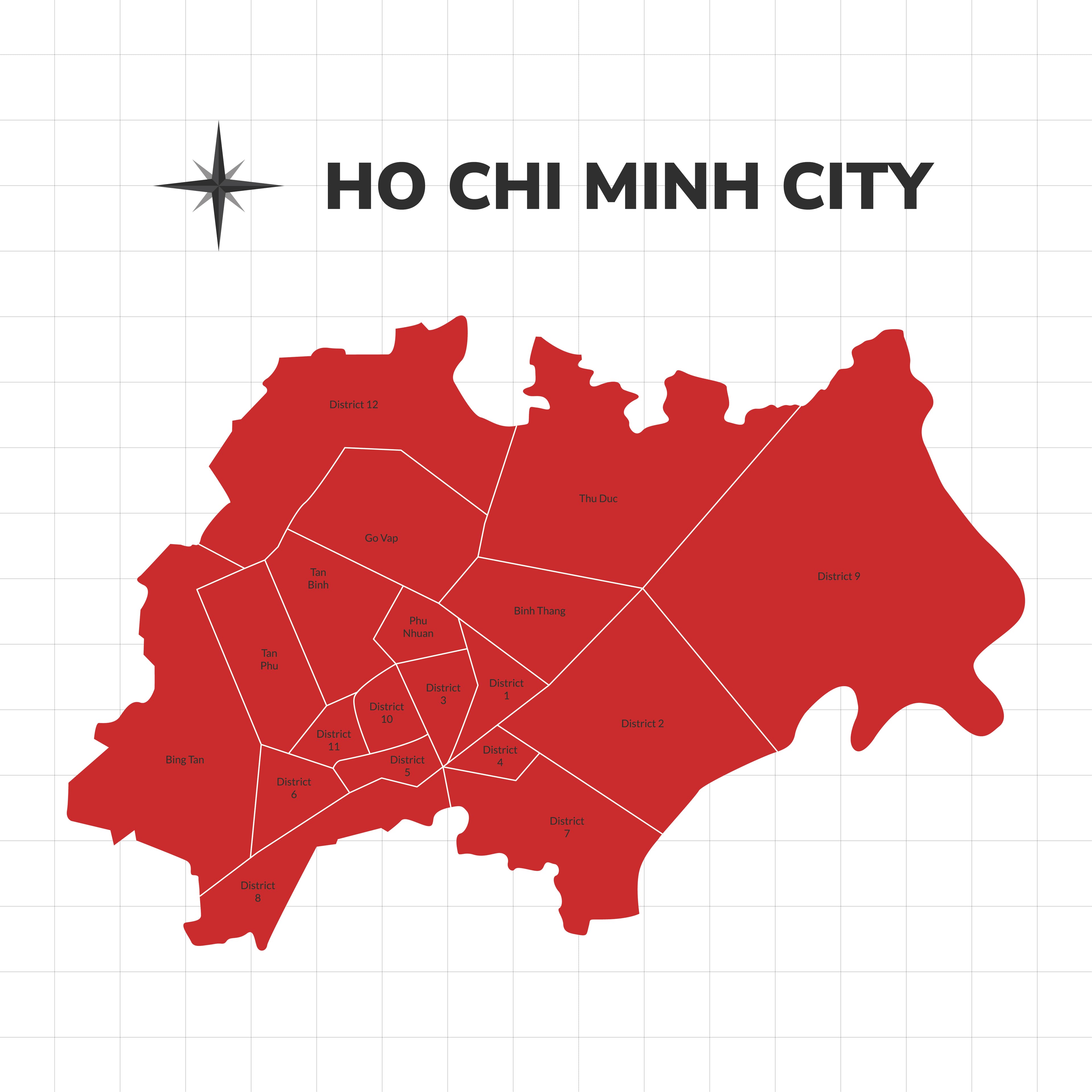
Every district has its own character, infrastructure, residential areas, commercial centres, and lifestyle pace. In total, Ho Chi Minh City has more than 20 urban districts and suburban districts, though only a handful tend to attract international residents.
For retirees moving from the UK, the concept is relatively straightforward. Think of the districts as neighbourhood zones that shape the local experience of living in the city.
Ho Chi Minh City districts can broadly be grouped into two categories: central districts and residential districts.
1. Central Districts
These include District 1, District 3, and District 4. They are closer to the historic centre of the city and tend to be busier, more vibrant, and slightly more expensive.
2. Residential or Expat-Focused Districts
Areas such as Thu Duc City, District 7, and Binh Thanh offer more modern apartment complexes, quieter streets, and facilities designed with international residents in mind.
For expat retirees, the decision usually comes down to personal lifestyle preferences. Some prefer the convenience and energy of central living, while others favour quieter districts with more space and a stronger community feel.
A note on names in 2026. Vietnam restructured its local government in 2025: the old District 2 became part of Thu Duc City back in 2021, and in mid-2025 the district tier was replaced by a ward-based system, while the wider city merged with Binh Duong and Ba Ria-Vung Tau to become a mega-city of around 14 million. Expats and locals still use the familiar names (District 1, Thao Dien, District 7), which is how we refer to them here.
Best Expat Districts at a Glance
| Area | Vibe | Best for | Rent (1 to 2 bed) | Notable spots |
|---|---|---|---|---|
| Thao Dien (Thu Duc City) | Leafy international enclave | Families, long-term expats, retirees | £600 to £1,300 | Masteri Thao Dien, The Vista, Q2; Vincom Mega Mall; ISHCMC, BIS |
| District 7 (Phu My Hung) | Planned, calm, suburban | Families, retirees, quiet living | £600 to £1,200 | Riverside Residence, The Crescent, Sky Garden; Crescent Mall; SSIS, RMIT, FV Hospital |
| District 1 | Central, lively, cosmopolitan | Professionals, social retirees | £800 to £1,600 | Ben Thanh, Nguyen Hue, serviced apartments |
| Binh Thanh | Emerging value, local energy | Value seekers, newcomers | £500 to £900 | Landmark 81, Vinhomes Central Park, river views |
| District 3 | Central but calm, characterful | Balance and culture seekers | £600 to £1,000 | French-colonial streets, Turtle Lake, cafes |
| Phu Nhuan | Local, connected, practical | Value, frequent flyers | £450 to £800 | Minutes from the airport, strong local food |
| District 4 | Riverfront, foodie, up-and-coming | Value near the centre | £550 to £900 | Riverfront towers, famous street food |
Top 7 Districts in Ho Chi Minh City for Expat Retirees
From vibrant central districts filled with restaurants and cultural attractions to quieter residential areas with modern apartments and green spaces, each part of Ho Chi Minh City has its own character and advantages.
Below are seven of the best districts in Ho Chi Minh City for expat retirees, each offering a unique balance of comfort, convenience, community, and affordability for those planning to enjoy their retirement in Vietnam.
1. Thao Dien (Thu Duc City, the former District 2)
For many international residents, Thu Duc City (formerly known as District 2), particularly the Thao Dien neighbourhood, is widely regarded as one of the best districts in Ho Chi Minh City for expat retirees. Over the past decade, the area has transformed into a thriving international community while still retaining a relaxed, residential atmosphere.
Located just across the Saigon River from the city centre, Thu Duc City offers a useful balance. On one hand, you remain close enough to the business and cultural hubs of the city. On the other, the neighbourhood feels noticeably calmer than the busier central districts. For retirees who want convenience without the constant intensity of downtown traffic, this balance can be particularly appealing.
In practical terms, Thao Dien functions almost like a self-contained expat village. Many daily necessities are within walking distance, which is a significant advantage for retirees who may prefer not to rely heavily on transport. The area is filled with international cafés, Western-style bakeries, fitness studios, and supermarkets stocking imported goods.
Lifestyle and Atmosphere
One of the most attractive aspects of Thu Duc City is its more spacious and greener environment compared with much of Ho Chi Minh City. While the city is known for its dense urban development, Thao Dien includes several residential complexes with gardens, swimming pools, and open communal areas.
Many apartment buildings are designed with international residents in mind, often including:
24-hour security and concierge services
Swimming pools and gyms
Landscaped gardens
On-site cafés or convenience stores
Underground parking and lift access
For retirees, these amenities can significantly enhance day-to-day comfort and security.
In addition, the riverside location contributes to a slightly more relaxed pace of life. Walking paths, cafés overlooking the water, and quieter streets create an atmosphere that many retirees find far more manageable than the crowded city centre.
Healthcare Access
Access to reliable healthcare is naturally a key concern for anyone considering retirement abroad. Fortunately, Thu Duc City is well positioned in this regard.
Several reputable international clinics and medical centres operate nearby, offering English-speaking doctors and Western standards of care. This means routine medical appointments, specialist consultations, and health check-ups can usually be arranged without difficulty.
For more specialised treatment, larger international hospitals located in other parts of the city can typically be reached within 20–30 minutes by car, depending on traffic.
Cost of Living in Thu Duc City
Although Thu Duc City is considered an upmarket area, it still offers excellent value compared with most UK cities. Accommodation costs vary depending on the type of property and level of luxury, but many retirees find the prices remarkably reasonable.
As a general guide:
Modern one-bedroom apartment: £600–£900 per month
Two-bedroom apartment in a high-end building: £900–£1,300 per month
Coffee at an international café: £2–£3
Dinner for two at a mid-range restaurant: £20–£35
Of course, choosing a slightly older building or living a few streets away from the main expat areas can reduce costs even further.
Who Thu Duc City Suits Best
Ultimately, Thu Duc City is particularly well suited to retirees who value:
A strong international community
Comfortable modern accommodation
Walkable neighbourhood amenities
A relaxed lifestyle close to the city centre
2. District 7 (Phu My Hung)
For retirees seeking a more structured and tranquil environment, District 7, particularly the Phu My Hung area, consistently ranks among the best districts in Ho Chi Minh City for expat retirees. Unlike much of the city, which developed organically over many decades, Phu My Hung was carefully planned as a modern urban community, resulting in wide streets, organised infrastructure, and a noticeably calmer atmosphere.

Located roughly 7–8 kilometres south of the city centre, District 7 feels distinctly different from central Ho Chi Minh City. While District 1 and District 3 can be vibrant and busy, Phu My Hung offers a more spacious and orderly setting that many retirees find far more comfortable for daily life.
In many ways, the area resembles a modern residential suburb rather than a traditional Southeast Asian city district. Streets are broader, pavements are more walkable, and traffic tends to be less chaotic. As a result, retirees often describe the district as one of the easiest parts of Ho Chi Minh City to navigate and live in long-term.
A Well-Planned International Community
Phu My Hung has developed into a thriving international community over the past two decades. The district is particularly popular with Korean, Japanese, and Western residents, which has led to the development of a wide range of international amenities.
For retirees, this creates a very practical living environment. Many everyday services and facilities are located within short walking or taxi distances, including:
International supermarkets and grocery stores
Shopping centres and department stores
Western and Asian restaurants
International clinics and pharmacies
Parks and recreational areas
Because the area was designed with residential living in mind, the layout feels more organised and less congested than many other parts of the city.
Housing and Residential Developments
District 7 offers a wide selection of modern residential properties, many of which were built specifically with international residents in mind. These developments typically feature high standards of maintenance and a range of amenities that make everyday living easier.
Common features in apartment complexes include:
24-hour security and reception
Swimming pools and fitness centres
Landscaped gardens and communal spaces
Underground parking
Professional building management
For retirees, these facilities provide both convenience and peace of mind.
Many apartments also include larger living spaces and balconies, which are sometimes more generous than equivalent properties in central districts.
Cost of Living in District 7
Although District 7 is considered a high-quality residential area, it remains very affordable compared with the UK. Many retirees are pleasantly surprised by the level of comfort available within a modest budget.
Typical monthly costs include:
Modern one-bedroom apartment: £600–£850
Two-bedroom apartment in a premium building: £850–£1,200
Weekly grocery shopping: £40–£60
Dinner for two at an international restaurant: £20–£35
Imported products can be slightly more expensive, but local food and services remain extremely affordable.
As a result, many retirees find they can maintain a comfortable and active lifestyle on significantly less than they would spend in Britain.
Transport and Accessibility
While District 7 offers many local amenities, it is worth noting that the district sits slightly further from the city centre than some other expat neighbourhoods. However, modern transport options make this far less of an issue than it might appear.
For example:
A taxi ride to District 1 typically takes 15–25 minutes, depending on traffic.
Ride-hailing services are widely available and inexpensive.
Many essential services: supermarkets, restaurants, medical clinics, are located within the district itself.
For retirees who prefer a quieter environment rather than being directly in the centre of the city, this slightly removed location can actually be an advantage.
Who District 7 Suits Best
Ultimately, District 7 tends to appeal most to retirees who value:
A clean, organised urban environment
Wide streets and walkable neighbourhoods
Access to parks and green spaces
A quiet residential lifestyle with strong international amenities
For British retirees in particular, the district often feels more familiar and comfortable compared with the denser areas of the city.
For these reasons, Phu My Hung continues to be recognised as one of the best districts in Ho Chi Minh City for expat retirees in 2026, offering a balanced lifestyle that combines convenience, comfort, and community.
3. District 1
For retirees who enjoy an energetic urban lifestyle, District 1 remains one of the most recognisable and vibrant areas in Ho Chi Minh City. As the historic and commercial centre of the city, it is home to major landmarks, cultural attractions, luxury hotels, and some of the best restaurants in Vietnam.

While it is undoubtedly one of the busiest areas, it is also frequently listed among the best districts in Ho Chi Minh City for expat retirees who want to remain at the heart of the action.
Living in District 1 means you are surrounded by the city’s most iconic locations, historic architecture, and international amenities.
For retirees who enjoy walking to restaurants, museums, parks, and theatres, the convenience of District 1 can be particularly appealing.
Central Location and Daily Convenience
One of the greatest advantages of District 1 is simply how central everything is. Many of the city’s key services, entertainment venues, and shopping destinations are located here. As a result, residents often find they can complete most daily activities without travelling far.
For example, retirees living in District 1 might easily walk to:
Major shopping centres and department stores
International restaurants and cafés
Museums, galleries, and cultural landmarks
Parks and riverside promenades
Banks and professional services
This level of accessibility can simplify daily life considerably, especially for those who prefer to minimise travel time around the city.
A typical day in District 1 might include a morning coffee at a local café, a stroll through a nearby park, lunch at an international restaurant, and an evening performance at a theatre or cultural venue.
Cultural and Historic Atmosphere
District 1 also offers a unique sense of place. Many of Ho Chi Minh City’s most famous colonial-era buildings and cultural institutions are located here, giving the district a distinctive architectural charm.
Tree-lined boulevards and historic buildings sit alongside modern skyscrapers, creating a fascinating mix of old and new. For retirees interested in culture, history, and architecture, living in District 1 can provide a constant sense of discovery.
In addition, the district hosts a wide range of events and festivals throughout the year, which means there is often something interesting happening nearby.
Dining and Social Life
For those who enjoy dining out, District 1 arguably offers the greatest variety of food options in the entire city. Restaurants range from casual Vietnamese street food stalls to high-end international dining establishments.
Residents can easily find:
Traditional Vietnamese cuisine
French and European restaurants
Japanese and Korean dining
International cafés and bakeries
Rooftop bars with city views
For retirees who enjoy an active social life, this diversity can make the district particularly appealing. It also tends to attract a large international community, which can make it easier to meet other expatriates.
Accommodation Options
Housing in District 1 generally consists of serviced apartments, modern high-rise residences, and renovated townhouses. Because of its central location, accommodation here tends to be slightly more expensive than in many other districts.
However, many retirees find the convenience worth the additional cost.
Typical housing options include:
Serviced apartments, which provide housekeeping, security, and reception services
Modern apartment buildings with gyms and swimming pools
Renovated heritage buildings offering unique character and charm
Many of these properties are located within walking distance of cafés, supermarkets, and parks, which can significantly enhance daily convenience.
Typical Cost of Living in District 1
Although District 1 sits at the premium end of the Ho Chi Minh City housing market, costs remain modest compared with most major UK cities.
As a general guide:
Luxury serviced apartment: £900–£1,600 per month
One-bedroom apartment in a modern building: £800–£1,200 per month
Dinner for two at a mid-range restaurant: £30–£50
Coffee at a central café: £2–£4
Of course, prices can vary significantly depending on the building, amenities, and exact location within the district.
Transport and Accessibility
Another advantage of living in District 1 is the ease of getting around the city. Most taxi services and ride-hailing platforms operate heavily in this area, making it quick and inexpensive to travel to other districts.
Typical travel times include:
District 3: around 5–10 minutes
Binh Thanh: roughly 10–15 minutes
Thu Duc City (Thao Dien): approximately 20 minutes
For retirees who frequently explore the city, this central position can be extremely convenient.
Who District 1 Suits Best
District 1 tends to appeal most to retirees who enjoy:
A lively and cosmopolitan city lifestyle
Easy access to restaurants, entertainment, and cultural attractions
The ability to walk to many daily amenities
Living at the centre of Ho Chi Minh City’s social and cultural scene
While it may not suit those seeking peace and quiet, retirees who enjoy a dynamic urban environment often find District 1 extremely rewarding.
For that reason, it continues to rank among the best districts in Ho Chi Minh City for expat retirees in 2026, particularly for those who want to experience the full energy and excitement of the city.
4. Binh Thanh District
For retirees looking for a balance between affordability and convenience, Binh Thanh District has become an increasingly attractive option in recent years. Situated directly next to several of the city’s most popular neighbourhoods, Binh Thanh offers a practical location with lower rental costs while still providing easy access to central Ho Chi Minh City.

Although it may not have the same international reputation as District 1 or Thao Dien in Thu Duc City, many long-term residents consider Binh Thanh to be one of the best districts in Ho Chi Minh City for expat retirees who want excellent value without sacrificing accessibility.
One of the district’s greatest advantages is its strategic position. It sits directly between the city centre and Thu Duc City, meaning residents can easily travel to both areas. For retirees who enjoy visiting international cafés, restaurants, and shopping centres but do not necessarily want to pay premium rental prices, this location can be particularly appealing.
Convenient Location and Connectivity
Binh Thanh’s location allows residents to move easily between several major parts of the city. In practical terms, many key areas are only a short taxi or ride-hailing journey away.
Typical travel times include:
District 1 (city centre): around 10–15 minutes
Thao Dien, Thu Duc City: approximately 10–15 minutes
District 3: roughly 15–20 minutes
This means retirees living in Binh Thanh can enjoy the restaurants, cultural attractions, and social venues of central districts while returning home to a quieter residential environment.
In addition, several major roads run through the district, making it relatively easy to navigate compared with some older neighbourhoods.
Modern Residential Developments
Over the past decade, Binh Thanh has experienced significant development, particularly in terms of residential property. Many modern apartment complexes have been built, offering high-quality living spaces at more accessible prices than similar developments in the city centre.
Typical residential complexes in Binh Thanh often include:
24-hour security and reception
Swimming pools and fitness facilities
Small supermarkets or convenience stores within the building
Landscaped communal areas
Secure parking facilities
For retirees, these amenities can provide a comfortable and secure living environment without the higher costs associated with premium districts.
Some high-rise buildings also offer excellent views of the Saigon River or the city skyline, which can make everyday living particularly enjoyable.
Cost of Living in Binh Thanh
One of the strongest advantages of Binh Thanh is its affordability. Rental prices are often noticeably lower than in neighbouring districts, making it attractive for retirees who want to manage their living costs carefully.
Typical monthly expenses include:
Modern one-bedroom apartment: £500–£750
Two-bedroom apartment in a newer building: £700–£900
Meal at a local restaurant: £3–£6
Coffee at a neighbourhood café: £1.50–£3
Because everyday services such as food, transport, and household help remain inexpensive, many retirees find they can maintain a comfortable lifestyle on a relatively modest budget.
Who Binh Thanh Suits Best
Binh Thanh is particularly well suited to retirees who value:
Good value accommodation
Easy access to District 1 and Thu Duc City
A more authentic local atmosphere
A balance between urban convenience and affordability
For many British expats, it represents a sensible middle ground—offering comfort and accessibility without the higher costs associated with more established expat districts.
For these reasons, Binh Thanh continues to emerge as one of the best districts in Ho Chi Minh City for expat retirees in 2026, particularly for those seeking practical living arrangements and excellent value for money.
5. District 3
While it is often overshadowed by the bustling reputation of District 1, District 3 is quietly regarded by many long-term residents as one of the most charming and liveable areas in Ho Chi Minh City. Located directly next to the city centre, it combines the convenience of a central location with a noticeably calmer and more residential atmosphere.

For expat retirees who want easy access to the heart of the city without living in the busiest neighbourhoods, District 3 is frequently considered one of the best districts in Ho Chi Minh City for expat retirees. It offers a blend of local character, historic architecture, and everyday convenience that many international residents find appealing.
A Central Location With a Quieter Atmosphere
One of District 3’s greatest advantages is its proximity to District 1. In many cases, residents can reach the city centre within five to ten minutes by taxi or ride-hailing service, making it extremely convenient for dining, shopping, or attending cultural events.
However, once you cross into District 3, the atmosphere changes noticeably. Streets are often lined with mature trees, traffic tends to feel slightly less intense, and residential neighbourhoods provide a calmer environment for daily life.
For retirees who enjoy city living but prefer a slightly slower pace, this balance can be ideal.
Historic Charm and Architectural Character
District 3 is also known for its distinctive architectural style. Many of the district’s buildings date back to the French colonial era, creating a unique mix of historic villas, government buildings, and traditional townhouses.
Walking through certain streets, you will find:
Elegant colonial-era homes with balconies and shutters
Tree-lined boulevards with shaded pavements
Small cafés tucked into historic buildings
Traditional markets and local shops
This architectural character gives District 3 a sense of personality that some newer neighbourhoods lack. For retirees who appreciate history and culture, the district can feel particularly rewarding to explore.
Authentic Vietnamese Lifestyle
Another advantage of District 3 is that it offers a more authentic local experience compared with areas dominated by expatriates. While the district still attracts some international residents, it remains largely a Vietnamese residential neighbourhood.
As a result, retirees living here often find themselves immersed in everyday local life.
Housing Options in District 3
Accommodation in District 3 is varied, reflecting the district’s long history. While some modern apartment buildings exist, many properties consist of smaller residential buildings, renovated townhouses, or boutique serviced apartments.
Common housing options include:
Renovated apartments in older buildings, often with more character
Small modern apartment blocks with basic amenities
Serviced apartments offering housekeeping and reception services
Converted villas divided into spacious residential units
Because the district is centrally located, property prices can be slightly higher than in some outer areas, but they remain reasonable compared with Western cities.
Typical Cost of Living in District 3
Although District 3 sits close to the city centre, the cost of living remains manageable for many retirees.
Typical monthly costs include:
One-bedroom apartment: £600–£850
Two-bedroom apartment: £850–£1,000
Local restaurant meal: £3–£7
Weekly groceries from local markets: £20–£35
Dining at local establishments can be particularly affordable, while international restaurants in nearby District 1 remain easily accessible.
Walkability and Daily Convenience
District 3 is also one of the more walkable parts of Ho Chi Minh City. Many residential streets feature pavements and shaded areas, which can make walking around the neighbourhood far more pleasant than in some busier districts.
Within a short distance, residents can usually find:
Local supermarkets and convenience stores
Pharmacies and small medical clinics
Traditional markets
Cafés and casual restaurants
Parks and green spaces
This accessibility can make everyday tasks easier, particularly for retirees who prefer not to travel long distances for basic services.
Who District 3 Suits Best
District 3 is particularly well suited to retirees who value:
A central location close to District 1
A quieter and more residential environment
Historic architecture and local character
A chance to experience authentic Vietnamese daily life
For many expats who have lived in the city for several years, District 3 eventually becomes a favourite neighbourhood precisely because of this balance between convenience and charm.
For these reasons, it continues to stand out as one of the best districts in Ho Chi Minh City for expat retirees in 2026, particularly for those who appreciate culture, character, and a more relaxed urban lifestyle.
6. Phu Nhuan District
For retirees who value practicality, accessibility, and a more local lifestyle, Phu Nhuan District is an increasingly appealing option. Situated between the city centre and Tan Son Nhat International Airport, the district offers a convenient location that allows residents to move easily around Ho Chi Minh City.

Although Phu Nhuan may not have the international reputation of areas such as Thu Duc City or District 7, it is often considered one of the best districts in Ho Chi Minh City for expat retirees who want a quieter neighbourhood with excellent connectivity. The district combines residential comfort with everyday convenience, making it particularly attractive for retirees who plan to travel frequently or host visiting family and friends.
Strategic Location and Easy Connectivity
One of Phu Nhuan’s strongest advantages is its location. The district sits between several key parts of the city, which makes travelling both locally and internationally relatively straightforward.
Typical travel times include:
District 1 (city centre): around 10–15 minutes
District 3: approximately 10 minutes
Tan Son Nhat International Airport: roughly 10–15 minutes
For retirees who expect to take regular flights, living close to the airport can be a significant advantage. Airport transfers are usually quick and inexpensive, particularly when using ride-hailing services.
At the same time, the district’s central position means residents remain close to many of the city’s main cultural and entertainment areas.
Food and Dining Culture
Phu Nhuan is particularly well known among locals for its excellent food scene. While the district may not have as many international restaurants as District 1, it offers a wide range of traditional Vietnamese dining options.
Residents can easily find:
Authentic noodle and rice dishes
Street food stalls serving regional specialities
Casual cafés and bakeries
Local seafood restaurants
Family-owned eateries that have operated for generations
For retirees interested in exploring Vietnamese cuisine, the district provides countless opportunities to discover new flavours at very affordable prices.
Housing Options in Phu Nhuan
Accommodation in Phu Nhuan is generally more affordable than in the main expat districts, which makes it an attractive choice for retirees managing a fixed retirement income.
The district offers a variety of housing types, including:
Small modern apartment buildings with basic facilities
Serviced apartments suitable for short- or long-term stays
Renovated townhouses converted into apartments
Mid-range residential complexes with security and shared amenities
While luxury developments are less common here than in Thu Duc City or District 7, many properties still provide comfortable and well-maintained living environments.
Typical Cost of Living in Phu Nhuan
One of the most appealing aspects of Phu Nhuan is the overall affordability of daily life.
Typical monthly expenses might include:
One-bedroom apartment: £450–£650
Two-bedroom apartment: £650–£800
Coffee at a local café: £1–£2
Meal at a neighbourhood restaurant: £2–£5
Because many services in the district cater primarily to local residents, prices for food, groceries, and everyday necessities tend to remain very reasonable.
For retirees looking to stretch their pension income further, this affordability can make a meaningful difference to long-term financial planning.
Who Phu Nhuan Suits Best
Phu Nhuan is particularly well suited to retirees who value:
Excellent connectivity across the city
Close proximity to the international airport
A more authentic Vietnamese neighbourhood
Affordable housing and everyday living costs
For retirees who prioritise practicality and cultural immersion rather than a heavily international environment, Phu Nhuan can be an excellent choice.
As a result, it continues to be recognised as one of the best districts in Ho Chi Minh City for expat retirees in 2026, particularly for those seeking convenience, value, and a genuine connection to local life.
7. District 4
In recent years, District 4 has quietly emerged as one of the most interesting residential areas in Ho Chi Minh City, particularly for expats looking for affordability combined with an excellent central location. Once known primarily as an industrial and port district, the area has undergone significant redevelopment, with modern apartment complexes and improved infrastructure transforming the neighbourhood.

Because of its location just across the Saigon River from the city centre, District 4 is now increasingly considered one of the best districts in Ho Chi Minh City for expat retirees who want easy access to District 1 without paying the higher rental prices associated with living directly in the centre.
For retirees who enjoy city life but prefer a slightly quieter residential base, District 4 can offer an appealing balance.
Prime Location Close to the City Centre
One of District 4’s greatest advantages is simply its proximity to the heart of Ho Chi Minh City. The district sits directly next to District 1 and is connected by several bridges, making travel between the two areas quick and convenient.
Typical travel times include:
District 1: around 5–10 minutes by taxi or ride-hailing service
District 7: approximately 10–15 minutes
District 3: around 15 minutes
This means retirees living in District 4 can easily enjoy the restaurants, theatres, museums, and shopping centres in the city centre while returning home to a slightly less hectic environment.
For many expats, this convenience is one of the district’s most attractive features.
Modern Residential Developments
Much of District 4’s recent popularity comes from the development of modern high-rise apartment complexes along the riverfront and throughout the district. These residential towers often offer high-quality facilities that are comparable to developments in more expensive areas of the city.
Many buildings include:
24-hour security and reception services
Swimming pools and fitness centres
Shared lounges and garden spaces
Convenience stores or cafés within the building
Underground parking
For retirees, these amenities provide comfort, safety, and convenience, particularly when living abroad.
Some apartments also offer impressive views of the Saigon River or the skyline of District 1, which can make everyday living especially enjoyable.
A Vibrant Food Culture
District 4 has long been known among locals as one of the city’s best destinations for authentic Vietnamese cuisine. In fact, many residents from other districts travel here specifically to enjoy the food.
The neighbourhood is famous for its lively street food scene, particularly in the evenings when many streets become lined with small restaurants and food stalls.
Retirees living in the district can easily find:
Fresh seafood restaurants
Traditional Vietnamese noodle dishes
Grilled meats and street snacks
Small cafés serving strong Vietnamese coffee
Casual family-run eateries offering regional specialities
For those who enjoy exploring local food culture, District 4 can be an exciting place to live.
Housing Options in District 4
Accommodation in District 4 has improved significantly over the past decade. While older residential buildings still exist, many newer developments now provide modern living spaces with good facilities and professional management.
Typical housing options include:
Modern apartment towers with full amenities
Mid-range apartment buildings suitable for long-term residents
Serviced apartments offering housekeeping and security
Compared with central districts, rental prices often remain slightly lower, which can be appealing for retirees managing their living expenses carefully.
Typical Cost of Living in District 4
District 4 offers good value considering its proximity to the city centre. Many retirees find they can enjoy modern accommodation while keeping monthly costs manageable.
Typical expenses may include:
One-bedroom apartment: £550–£750 per month
Two-bedroom apartment: £750–£900 per month
Street food meal: £1.50–£3
Dinner for two at a local restaurant: £10–£20
Because the district still retains a strong local character, everyday food and services remain extremely affordable.
Who District 4 Suits best
District 4 is particularly well suited to retirees who value:
Close proximity to District 1
Affordable modern apartments
A lively local food culture
A balance between city convenience and residential living
For British expats who want to stay close to the centre of Ho Chi Minh City without paying premium central rents, District 4 can be a very attractive option.
Thanks to its ongoing redevelopment and prime location, it continues to gain attention as one of the best districts in Ho Chi Minh City for expat retirees in 2026, offering convenience, character, and excellent value for long-term living.
Financial Considerations for Retiring in Ho Chi Minh City
While lifestyle and location are naturally important when choosing where to retire, financial planning remains one of the most critical aspects of relocating abroad. From my experience advising international clients, many retirees initially focus on the lower cost of living in Vietnam, but successful long-term retirement abroad requires a broader financial strategy.
Ho Chi Minh City can offer an excellent quality of life at a comparatively modest cost. However, careful planning ensures that your income, investments, and tax arrangements continue to support your long-term financial security.
For UK retirees specifically, note that the State Pension is frozen in Vietnam, so private income planning matters more; see managing your UK pension in Vietnam and how much you need to retire in Vietnam. For a wider view of daily life, our guide to expat life in Ho Chi Minh City and how to retire in Vietnam go deeper.
1. Understanding The Cost of Living
One of the main reasons many expats consider retiring in Vietnam is the relatively low cost of living compared with the UK. Everyday expenses such as food, transport, and services are significantly cheaper, allowing retirees to maintain a comfortable lifestyle without excessive spending.

For example, a retired couple living comfortably in Ho Chi Minh City might typically spend between:
£1,200 and £2,000 per month depending on lifestyle and housing choices
£600–£1,200 per month on accommodation, depending on district and apartment quality
£200–£350 per month on groceries and dining out
£50–£100 per month on transport, mainly taxis or ride-hailing services
Naturally, those who frequently travel, dine in luxury restaurants, or live in premium developments may spend more. Nevertheless, many retirees find their pension income stretches considerably further than it would in Britain.
2. Managing Pension Income Abroad
Another key consideration is how you will receive and manage your pension income while living overseas.
British retirees may receive income from several potential sources, including:
The UK State Pension
Workplace or private pensions
Investment income from savings or portfolios
Rental income from property in the UK or elsewhere
When living abroad, it is important to ensure these income streams remain accessible, tax-efficient, and protected against currency fluctuations.
For example, some retirees choose to maintain UK-based accounts for receiving pension payments while transferring funds periodically to Vietnam for daily living expenses. Others may explore international banking arrangements that allow more flexible access to multiple currencies.
3. Currency Exchange and Income Stability
Currency risk is an important issue that retirees sometimes overlook. Because many British expats receive income in pounds but spend money in Vietnamese dong, exchange rate fluctuations can influence the value of their monthly income.
Over time, these fluctuations can either increase or reduce your effective spending power.

Practical strategies may include:
Holding funds across multiple currencies
Planning transfers when exchange rates are favourable
Maintaining an emergency reserve in pounds
Ensuring investment portfolios are appropriately diversified internationally
A proactive approach to currency management can help reduce financial uncertainty over the long term.
4. Healthcare Planning
Healthcare is another important financial consideration when retiring abroad. Although healthcare costs in Vietnam are generally lower than in the UK private sector, international-standard hospitals and clinics still require adequate insurance coverage.
Most retirees living in Ho Chi Minh City choose international health insurance policies, which typically provide access to:
Private hospitals and international clinics
English-speaking medical professionals
Emergency evacuation if specialised treatment is required elsewhere
The cost of such policies varies depending on age, coverage level, and medical history. However, many retirees still find the total cost of healthcare abroad lower than private healthcare in Western countries.
5. Investment Strategy While Living Overseas
Retirement abroad also presents an opportunity to reassess your overall investment strategy.

From a wealth management perspective, international living often introduces new considerations such as:
Tax residency rules across multiple jurisdictions
Investment platform access for expatriates
Currency diversification within portfolios
Estate planning and inheritance arrangements
Retirees who maintain well-diversified investment portfolios may be better positioned to manage long-term financial stability while enjoying the lifestyle benefits of living abroad.
As an adviser working primarily with expat clients, I often encourage retirees to regularly review their investment structure to ensure it remains suitable for their evolving circumstances.
6. Practical Financial Planning Steps Before Relocating
Before moving to Vietnam, retirees may find it helpful to take several practical financial steps. Planning early can help avoid complications later on.
Key steps often include:
Reviewing pension income and expected retirement expenses
Confirming tax obligations in both the UK and Vietnam
Establishing appropriate international banking arrangements
Securing comprehensive health insurance coverage
Reviewing investment portfolios and long-term income strategy
These preparations help ensure that the move abroad is not only enjoyable but also financially sustainable.
Taking the Next Step Towards Retirement in Ho Chi Minh City
Each neighbourhood presents its own advantages, and the right choice ultimately depends on your priorities: community, affordability, convenience, or tranquillity.
As someone who has spent years working with expats managing their finances abroad, I always encourage retirees to visit potential locations before committing long-term. Spend time exploring neighbourhoods, speaking with other expatriates, and understanding how your daily life might unfold.
Get in touch with us today for a free consultation on retirement planning abroad!
Frequently Asked Questions
1. Where do most expats live in Ho Chi Minh City?
The two biggest expat hubs are Thao Dien (the former District 2, now part of Thu Duc City) and Phu My Hung in District 7. Thao Dien is a leafy international enclave close to the centre, while Phu My Hung is a planned, family-friendly township to the south. District 1 and District 3 are popular for central city living.
2. Is District 2 (Thao Dien) good for expats?
Yes, Thao Dien is the most established expat area in the city. It offers international cafes, supermarkets, schools (ISHCMC, BIS) and modern riverside developments such as Masteri Thao Dien and The Vista, all in a greener, calmer setting a short drive from the centre. It is popular with families, long-term expats and retirees.
3. Which is the richest district in Ho Chi Minh City?
District 1 has the most expensive central real estate, while the emerging Thu Thiem area is the new luxury district across the river. Among expat enclaves, Thao Dien and Phu My Hung are the two most affluent neighbourhoods, favoured by international families and senior professionals.
4. Is District 7 (Phu My Hung) good for families and retirees?
Very. Phu My Hung is a planned township with wide streets, parks, riverside residences (such as Riverside Residence, Riverpark and The Crescent), top international schools including Saigon South International School, and FV Hospital nearby. Its calm, orderly layout suits families and retirees who prefer a quieter, walkable environment.
5. What is the cheapest good area for expats in Ho Chi Minh City?
Phu Nhuan, District 4 and Binh Thanh offer the best value, with modern one-bedroom apartments from roughly £450 to £750 a month and quick access to the centre. They trade some international polish for lower rents and a more local feel.