


Ho Chi Minh City has become one of Southeast Asia's most appealing destinations for British retirees. Its warm climate, good private healthcare, superb food and relatively low cost of living offer a lifestyle that would cost far more in the UK.
The city is vast and wonderfully diverse, and each area has its own character and pace of life. Some are vibrant and cosmopolitan, while others offer the quieter, community-focused environment that many retirees prefer. On top of that, the city's map was redrawn in July 2025, so the district names you will hear every day are no longer the official ones.
As a financial adviser at Benjamin Sharvell IFA working with British retirees here, I am often asked where to live. In this guide, I will walk you through the best districts in Ho Chi Minh City for expat retirees in 2026, explain how the new ward system works, compare typical rents, and set out the financial steps that make retirement here sustainable.
Key Takeaways
- On 1 July 2025, Ho Chi Minh City abolished its districts and merged with Binh Duong and Ba Ria-Vung Tau. Locals and estate agents still use the old district names, but official addresses now use new ward names.
- Thao Dien (old District 2) and Phu My Hung (old District 7) remain the most popular choices for retirees, thanks to their international communities, modern apartments and walkable streets.
- District 1, District 3, Binh Thanh, Phu Nhuan and District 4 suit retirees who want a more central or more local lifestyle, often at lower rents.
- As a rough guide, a furnished one-bedroom apartment in Thao Dien costs about VND 14 to 20 million a month (roughly £400 to £580) in late 2026.
- Vietnam has no UK social security agreement, so your UK State Pension is frozen at the rate you first receive here. Plan your other income with this in mind.
- Vietnam has no dedicated retirement visa, so most retirees rely on other long-stay options. Check your visa route before committing to a long lease.
Why Ho Chi Minh City Appeals to Expat Retirees
Before exploring the areas themselves, it is worth understanding why so many retirees consider Vietnam. From my perspective as a financial adviser working with British expats, the appeal usually comes down to three things:
- Lower cost of living. Everyday expenses are far lower than in the UK. A comfortable modern apartment in a popular expat area can cost less than a room in a shared house in parts of London.
- Good private healthcare. International hospitals and clinics offer high standards of care with English-speaking doctors, at lower prices than private care in Britain. Our guide to health insurance for expats in Vietnam explains how to choose cover.
- A vibrant lifestyle and community. The food, markets, culture and growing international community make it easy to build a social life.
For a full breakdown of everyday prices, see our guide to the cost of living in Vietnam. Of course, the key to a happy retirement here is choosing the right neighbourhood.
Districts in Ho Chi Minh City: What Changed in 2025
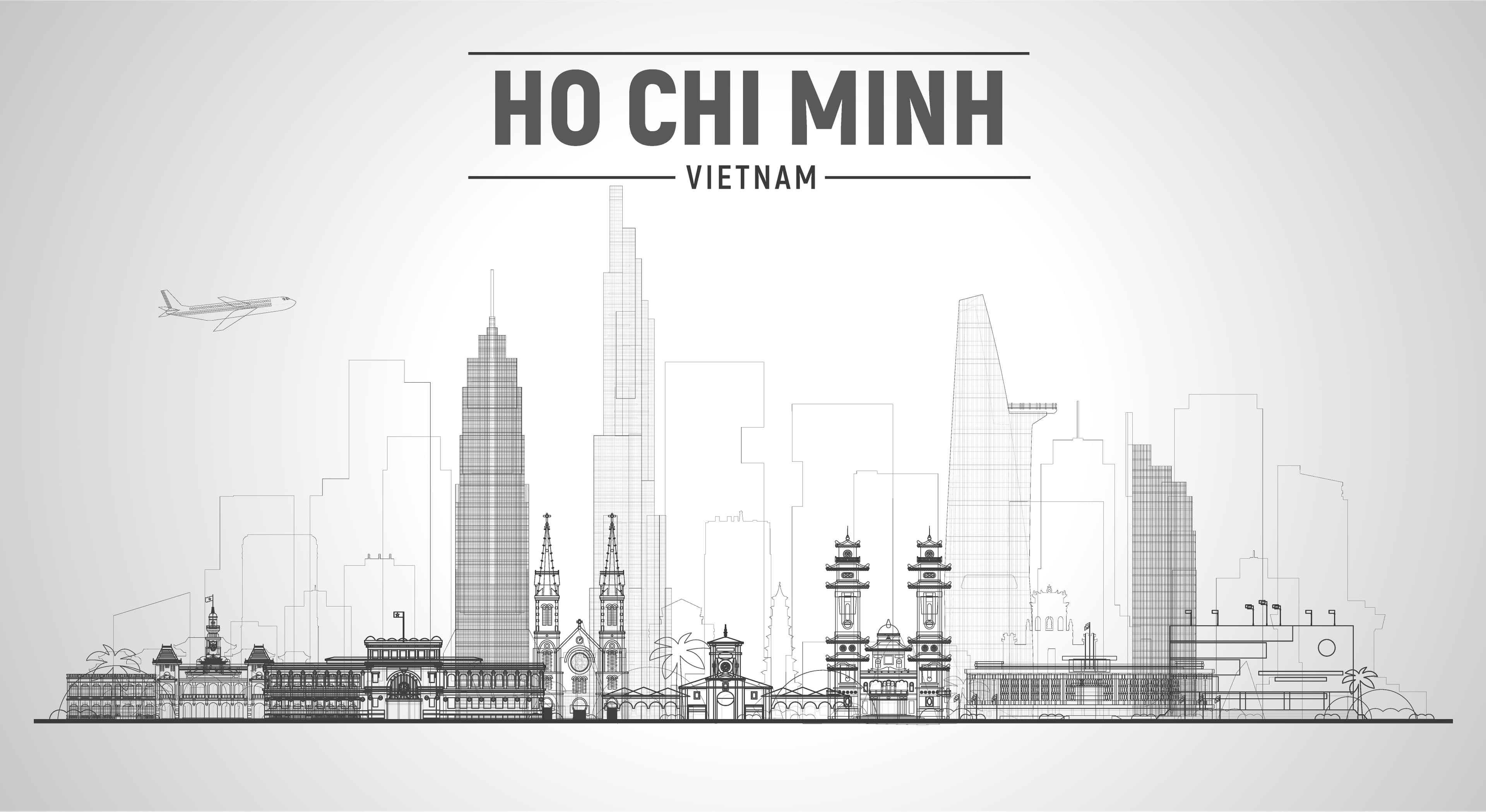
If you are reading older guides, this is the most important update. On 1 July 2025, as part of a nationwide reform, Ho Chi Minh City merged with the neighbouring provinces of Binh Duong and Ba Ria-Vung Tau, and the district level of local government was abolished. The enlarged city is now made up of 168 wards, communes and one special zone, with 102 of them inside the old city boundaries.
In practice, this means you will still hear people talk about District 1, District 2 or District 7. Taxi drivers, estate agents and long-term expats all use the old names, and they remain the easiest way to describe each area. However, your lease, your temporary residence registration and any official paperwork will use the new ward name.
The table below shows where the areas in this guide now sit.
| Area people still call | Main neighbourhood for retirees | New ward name(s) |
| District 2 | Thao Dien and An Phu | Mostly An Khanh ward |
| District 7 | Phu My Hung | Mainly Tan My, Tan Hung, Tan Thuan and Phu Thuan wards |
| District 1 | City centre | Saigon, Ben Thanh, Tan Dinh and Cau Ong Lanh wards |
| Binh Thanh | Near the river and Landmark 81 | Gia Dinh, Binh Thanh, Binh Loi Trung, Thanh My Tay and Binh Quoi wards |
| District 3 | Leafy central streets | Ban Co, Xuan Hoa and Nhieu Loc wards |
| Phu Nhuan | Between the centre and the airport | Phu Nhuan, Cau Kieu and Duc Nhuan wards |
| District 4 | Riverside, south of the centre | Vinh Hoi, Khanh Hoi and Xom Chieu wards |
Throughout this guide, I use the old district names because that is how you will hear them described, with the new ward names alongside.
The 7 Best Districts at a Glance
Each area has a different balance of community, convenience, calm and cost. This quick comparison will help you narrow down your shortlist before reading the detail below.
| Area | Atmosphere | International community | Relative rent | Best for |
| Thao Dien (District 2) | Relaxed, leafy, riverside | Very strong | Higher | Community and walkable amenities |
| Phu My Hung (District 7) | Planned, calm, spacious | Very strong | Medium to higher | Order, parks and healthcare |
| District 1 | Busy, cosmopolitan | Strong | Highest | City life and culture |
| Binh Thanh | Mixed, well connected | Growing | Medium | Value close to the centre |
| District 3 | Leafy, historic, local | Moderate | Medium | Character and a central base |
| Phu Nhuan | Local, practical | Small | Lower | Budget, food and airport access |
| District 4 | Lively, redeveloping | Small but growing | Medium | Modern flats near the centre |
1. District 2 (Thao Dien): Now Mainly An Khanh Ward
For many international residents, Thao Dien is the first choice, and it is widely regarded as one of the best districts in Ho Chi Minh City for expat retirees. Over the past decade, it has become a thriving international community while keeping a relaxed, residential feel.
Just across the Saigon River from the city centre, Thao Dien gives you a useful balance. You are close to the centre, but the neighbourhood feels much calmer than downtown. In practice, it works almost like a self-contained expat village, with international cafés, bakeries, gyms and supermarkets stocking imported goods, many within walking distance.
Lifestyle and Atmosphere
Thao Dien is greener and more spacious than much of the city. Many apartment complexes include 24-hour security, swimming pools, gyms and landscaped gardens, which add a great deal of day-to-day comfort and security. The riverside location, with cafés overlooking the water and quieter side streets, creates a pace of life that many retirees find far more manageable than the centre.

Getting Around
Since December 2024, Thao Dien has had a stop on Metro Line 1, which runs from Ben Thanh in the city centre to Suoi Tien in the east. The whole line takes about 29 minutes end to end, and for retirees who would rather not ride a motorbike, it offers a calm, air-conditioned way into the centre.
Healthcare Access
Several international clinics with English-speaking doctors operate in and around Thao Dien, so routine appointments and check-ups are easy to arrange. Larger international hospitals elsewhere in the city can usually be reached within 20 to 30 minutes by car, depending on traffic.
Typical Costs in Thao Dien
- Furnished one-bedroom apartment: about VND 14 to 20 million a month (roughly £400 to £580)
- Two-bedroom apartment in a modern complex: about VND 22 to 35 million a month (roughly £640 to £1,010)
Choosing an older building, or living a few streets away from the main expat area, can reduce costs further. Riverside and luxury buildings can cost considerably more.
Thao Dien suits retirees who value a strong international community, comfortable modern accommodation, walkable amenities and a relaxed lifestyle close to the centre.
2. District 7 (Phu My Hung): Now Tan My and Neighbouring Wards
For retirees seeking a more structured and tranquil environment, Phu My Hung consistently ranks among the best districts in Ho Chi Minh City for expat retirees. Unlike much of the city, which grew organically over decades, Phu My Hung was planned as a modern urban community, with wide streets, organised infrastructure and a noticeably calmer atmosphere.
Located roughly 7 to 8 kilometres south of the centre, it feels more like a modern suburb than a traditional Southeast Asian city district. Pavements are more walkable, traffic is less chaotic, and many retirees describe it as one of the easiest parts of the city to live in long term.
A Well-Planned International Community
Phu My Hung is popular with Korean, Japanese and Western residents, which has created a wide range of international supermarkets, shopping centres, restaurants, clinics and parks. Many everyday services are within a short walk or taxi ride.
Healthcare Access
For retirees, one of Phu My Hung's strongest advantages is healthcare. FV Hospital, one of the city's best-known international hospitals, sits within the area's medical campus, alongside several international clinics. Being close to a major hospital can make a real difference to peace of mind as you get older.

Typical Costs in Phu My Hung
- Two-bedroom apartment in a modern complex: about VND 20 to 28 million a month (roughly £580 to £810)
- Older or smaller apartments on the edge of the area can cost noticeably less
Imported products can be slightly more expensive, but local food and services remain very affordable, so many retirees find they can live comfortably on far less than in Britain.
Transport and Accessibility
Phu My Hung is further from the centre than some other expat areas. A taxi to District 1 typically takes 15 to 25 minutes, depending on traffic, and ride-hailing services are widely available and inexpensive. Because most daily needs are met locally, many retirees see the distance as an advantage rather than a drawback.
Phu My Hung suits retirees who value a clean, organised environment, wide walkable streets, parks and green spaces, and easy access to international healthcare.
3. District 1: Now Saigon, Ben Thanh, Tan Dinh and Cau Ong Lanh Wards
For retirees who enjoy an energetic urban lifestyle, District 1 remains the most recognisable and vibrant part of the city. As the historic and commercial centre, it is home to major landmarks, museums, theatres, luxury hotels and some of the best restaurants in Vietnam.
Living here means you can walk to shopping centres, cafés, parks, riverside promenades, banks and cultural venues. Tree-lined boulevards and colonial-era buildings sit alongside modern towers, and there is almost always something happening nearby.

Accommodation and Costs
Housing here is mostly serviced apartments, modern high-rises and renovated older buildings. Because of its central location, rents are generally the highest in the city, particularly in serviced apartments and new towers, although smaller older apartments can still be found at more modest prices.
Getting Around
District 1 is the hub of the city's transport. Taxis and ride-hailing services are plentiful, and Ben Thanh is the starting point of Metro Line 1. District 3 is around 5 to 10 minutes away by car, and Thao Dien around 20 minutes.
District 1 suits retirees who enjoy a lively, cosmopolitan lifestyle and want to walk to restaurants, entertainment and culture. It is less suited to those seeking peace and quiet.
4. Binh Thanh: Now Gia Dinh, Binh Thanh and Neighbouring Wards
For retirees looking for a balance between value and convenience, Binh Thanh has become an increasingly attractive option. It sits directly between the city centre and Thao Dien, so you can easily reach both while paying less than in either.
Over the past decade, Binh Thanh has seen major residential development, including large modern complexes along the river with security, pools, gyms and on-site shops. Some high-rise buildings offer superb views of the Saigon River and the skyline. It is also home to Vinmec Central Park, one of the city's major international hospitals.
Typical journey times are around 10 to 15 minutes to District 1 and to Thao Dien. Rents vary widely, from simple studios to premium riverside apartments, but mid-range modern apartments are often noticeably cheaper than similar units in Thao Dien.
Binh Thanh suits retirees who value good-value accommodation, easy access to the centre and Thao Dien, and a more local atmosphere.
5. District 3: Now Ban Co, Xuan Hoa and Nhieu Loc Wards
Often overshadowed by District 1, District 3 is quietly regarded by many long-term residents as one of the most charming and liveable areas of the city. It sits next to the centre but has a noticeably calmer, more residential feel.
Many streets are lined with mature trees, and the area is known for its French colonial villas, small cafés in historic buildings and traditional markets. It remains largely a Vietnamese neighbourhood, so you experience everyday local life while staying a few minutes from District 1.
Housing is varied, from renovated apartments in older buildings and converted villas to boutique serviced apartments. There are fewer large complexes with pools than in Thao Dien or Phu My Hung, but rents are usually moderate and local food is very affordable. Many streets are pleasant to walk, with pharmacies, markets and clinics close by.
District 3 suits retirees who value a central location, historic character and a chance to experience authentic Vietnamese life.
6. Phu Nhuan: Now Phu Nhuan, Cau Kieu and Duc Nhuan Wards
For retirees who value practicality and a more local lifestyle, Phu Nhuan is an appealing and affordable option. It sits between the city centre and Tan Son Nhat International Airport, which makes it easy to get around the city and to travel abroad.
Typical journey times are around 10 to 15 minutes to District 1 and to the airport, which is a real advantage if you fly back to the UK regularly or host visiting family. The area is also well known among locals for its food, from noodle shops to family-run restaurants that have operated for generations.

Housing is mostly smaller apartment buildings, serviced apartments and converted townhouses, with fewer luxury developments. Because many services cater mainly to local residents, rents and everyday costs are usually among the lowest of the areas in this guide.
Phu Nhuan suits retirees who value affordability, cultural immersion, great local food and quick access to the airport.
7. District 4: Now Vinh Hoi, Khanh Hoi and Xom Chieu Wards
In recent years, District 4 has quietly become one of the more interesting residential areas for expats. Once known mainly as a port area, it has been transformed by modern apartment towers and better infrastructure, and it sits just across the river from District 1.
Several bridges link it to the centre, so District 1 is usually only 5 to 10 minutes away, with District 7 around 10 to 15 minutes. Many of the newer towers have pools, gyms and river or skyline views, and rents are often lower than in the centre for similar quality.
District 4 is also famous among locals for its street food, especially seafood, grilled dishes and busy evening food streets. It still has a strong local character, which keeps everyday costs low.
District 4 suits retirees who value modern apartments close to the centre, lively local food culture and good value.
A Bonus Option: The Coast at Vung Tau
Since the 2025 merger, the seaside city of Vung Tau has technically become part of Ho Chi Minh City, in wards such as Vung Tau, Tam Thang, Rach Dua and Phuoc Thang. It is roughly two hours from the city centre by road, with ferry services also available.
For retirees who prefer sea air, a slower pace and lower rents, Vung Tau can be worth considering, either as a main base or a second home. The trade-off is fewer international hospitals and a smaller expat community than in Thao Dien or Phu My Hung. If you are weighing up other locations entirely, our guide to the best cities in Vietnam for expats to retire compares the main options.
How to Choose the Right District: Step by Step
Every retiree's priorities are different. Working through these steps in order will help you find the area that fits you best.
Step 1: Decide What Matters Most
Rank your priorities: community, healthcare, quiet, walkability, budget, or being close to the airport. For example, if healthcare and calm are top of your list, Phu My Hung is often a natural fit. If you want an international social life on your doorstep, Thao Dien may suit you better.
Step 2: Set a Realistic Budget
Work out how much you can comfortably spend on rent each month, alongside living costs, insurance and travel home. Our guide on how much to retire in Vietnam shows what different budgets look like.
Step 3: Check Your Visa Route
Vietnam does not offer a dedicated retirement visa, so check which long-stay option will work for you before signing a long lease. Our guide to the Vietnam retirement visa explains the current choices.

Step 4: Visit and Stay Short Term First
Before committing, spend a few weeks in a serviced apartment or short-term rental in your top two or three areas. Visit at different times of day, test the journey to the hospital you would use, and talk to other expats who live there.
Step 5: Check the Building, Not Just the Area
For retirees, the building matters as much as the district. Check for reliable lifts, step-free access, good management, security, a back-up generator and how well the building copes with heavy rain, as some streets can flood in the rainy season.
Step 6: Sign a Clear Lease and Register Your Address
Make sure your lease is in writing, states exactly what is included, such as management fees and utilities, and uses the new ward name. Your landlord or building management should register your temporary residence with the local police, which is a legal requirement for foreigners.
Financial Considerations for Retiring in Ho Chi Minh City
While lifestyle and location are important, financial planning is what makes a retirement abroad sustainable. Many retirees focus on the lower cost of living, but a successful long-term move needs a broader strategy covering income, tax, currency and healthcare.
1. Understand Your Likely Costs
A retired couple can live comfortably in Ho Chi Minh City on a budget that would be tight in much of the UK, but costs depend heavily on where you live, how often you eat out and how much you travel. Rent is usually the biggest single cost, followed by health insurance, so build your budget around those two first.
2. Plan for a Frozen State Pension
This is the point many retirees miss. Vietnam has no social security agreement with the UK, so your UK State Pension is frozen at the rate you first receive here and does not rise each April. Over a long retirement, the gap with UK pensioners can grow substantially, so your other income needs to keep pace with rising costs.
3. Manage Your Pension Income Abroad
Many British retirees draw on a mix of the State Pension, workplace or private pensions, investments and sometimes UK rental income. Some keep a UK bank account to receive pension payments and transfer money to Vietnam periodically, while others use international accounts. Under the UK-Vietnam double taxation agreement, private pensions paid to a Vietnam resident are generally taxable only in Vietnam, and you can apply to HMRC for a no-tax code. Our guide on how to manage UK pension in Vietnam explains your options.
4. Understand Vietnamese Tax
If you spend 183 days or more a year in Vietnam, you are generally a Vietnam tax resident and taxed on your worldwide income. Retirement pensions paid under social insurance law, or a foreign equivalent, are listed as exempt, but other income such as dividends and interest may be taxable here. Our guide to personal income tax in Vietnam explains the 2026 rules.
5. Manage Currency Risk
Most British retirees receive income in pounds but spend in Vietnamese dong, so exchange rate movements change your spending power. Practical steps include holding money in more than one currency, avoiding large transfers at poor rates, keeping an emergency reserve and making sure your investments are diversified internationally. You will also need a local account, and our guide on how to open a bank account in Vietnam explains the documents banks ask for.
6. Secure Health Insurance Early
Most retirees in Ho Chi Minh City take out international health insurance, covering private hospitals, English-speaking doctors and, ideally, medical evacuation. Premiums rise with age and some insurers have upper age limits for new policies, so it pays to arrange cover before you move rather than later.
7. Build a Retirement Income Plan
Bringing all of this together into a single plan, showing how much income you need, where it will come from and how it will be taxed, is the best way to retire here with confidence. Our step-by-step guide to creating a retirement income plan is a good place to start.
Taking the Next Step Towards Retirement in Ho Chi Minh City
Each neighbourhood has its own advantages, and the right choice depends on your priorities, whether that is community, healthcare, affordability or tranquillity. I always encourage retirees to visit their shortlisted areas before committing, speak with other expats and picture how their daily life would unfold.
Just as importantly, make sure your finances are ready for the move. As a financial adviser, I help British retirees in Vietnam plan their pension income, investments, tax and currency so their retirement here is both enjoyable and secure.
Get in touch with us today for a free consultation on retirement planning abroad.
This article is for general information only and does not constitute financial, tax or legal advice. Rents, exchange rates and rules are correct as of November 2026 and may change. Please seek personal advice before making any retirement or investment decision.
Frequently Asked Questions
1. What is the best district in Ho Chi Minh City for expat retirees?
Thao Dien (old District 2) and Phu My Hung (old District 7) are the most popular, thanks to their international communities, modern apartments and easier day-to-day living. Phu My Hung is often preferred for calm and healthcare, while Thao Dien is preferred for its social scene and metro access.
2. Does Ho Chi Minh City still have districts?
Not officially. Districts were abolished on 1 July 2025 and replaced by wards. However, people still use the old district names in everyday conversation, so you will hear both.
3. Which ward is Thao Dien in now?
Thao Dien is now mostly part of An Khanh ward, which was formed from the former An Khanh, An Loi Dong, Thao Dien and Thu Thiem wards and part of An Phu.
4. How much does it cost to rent an apartment in Thao Dien?
As a rough guide in late 2026, a furnished one-bedroom apartment costs about VND 14 to 20 million a month, or roughly £400 to £580. Two-bedroom apartments in modern complexes typically cost more.
5. Is there a retirement visa in Vietnam?
No. Vietnam does not currently offer a dedicated retirement visa, so most retirees use other long-stay options. Check the latest rules before you commit to a long lease.
6. Will my UK State Pension increase if I retire in Ho Chi Minh City?
No. Vietnam has no social security agreement with the UK, so your State Pension is frozen at the rate you first receive here and does not rise each year.