

Asia is home to some of the most affordable, exciting and liveable places on earth, which is exactly why deciding on the best Asian country to live in can feel overwhelming. As a financial adviser who works with internationally mobile clients, and an expat myself, I see first-hand how much the choice of country shapes not just quality of life, but long-term wealth.
This guide ranks the best Asian countries to live in for 2026, whether you are a retiree, a digital nomad, a family relocating for work, or a professional chasing opportunity. Each pick is weighed on the factors that actually matter day to day: cost of living, ease of settling in (including how far English gets you), long-stay visa options, healthcare, safety and the financial-planning realities of earning or spending across borders.
How we chose: the rankings below draw on the 2026 InterNations Expat Insider survey, cost-of-living and safety indices, current 2026 visa rules, and my own experience advising expats across the region.
New to expat life? Start with our explainer on what an expat is, or see our wider guides to the best places to live as an expat and the best countries for British expats.
Best Asian Countries to For Expats Live In 2026 at a Glance
If you only skim one thing, make it this. Typical costs are for a single person living comfortably (not backpacking, not luxury) and are indicative. Your number depends heavily on city and lifestyle.
| Country | Typical monthly cost (single) | English ease | Headline long-stay visa (2026) | Healthcare | Best for |
|---|---|---|---|---|---|
| Vietnam | £800–£1,200 | Moderate | E-visa up to 90 days (multi-entry); business/TRC routes; 10-year "golden visa" proposed | Good private care in HCMC & Hanoi | Value, digital nomads, early retirees |
| Thailand | £1,200–£1,800 | Moderate | DTV (5-year, 180 days/entry); LTR for high earners | Excellent private hospitals | Infrastructure, healthcare, first-time expats |
| Malaysia | £1,100–£1,600 | High | MM2H second-home; DE Rantau nomad pass | Excellent value private care | English speakers, families |
| Indonesia (Bali) | £900–£1,400 | Moderate–High (Bali) | Remote-worker & second-home visa options; KITAS | Good in cities; serious cases go to SG/BKK | Nomads, lifestyle, wellness |
| Philippines | £900–£1,300 | Very high (official language) | SRRV retirement visa | Variable by region | English speakers, retirees, community |
| India | £700–£1,100 | High (business & cities) | Employment/business visas; e-visa | High-quality private in metros | Career acceleration, extreme value |
| Singapore (premium hub) | £2,500–£4,000+ | Official language | Employment Pass; various work passes | World-class | High earners, safety, regional careers |
Prefer to sanity-check the numbers before committing? Our full cost-of-living in Vietnam breakdown and guide to the best countries to retire on a budget go deeper on real monthly spend.
1. Vietnam – The Standout Choice for Expats in 2026
Vietnam has firmly established itself as one of the best Asian countries for expats, and heading into 2026 it remains the most compelling option when lifestyle quality and financial efficiency are considered together.
What sets Vietnam apart is not just how affordable it is, but how effectively that affordability translates into improved long-term financial outcomes for expats.

Exceptional Cost of Living Advantage
Vietnam consistently ranks first globally for expat personal finance satisfaction, with 86% of expats rating the cost of living positively, more than double the global average. In practical terms, this means expats can enjoy a comfortable, even premium lifestyle at a fraction of the cost found in Western countries.
To put this into context:
A well-located one-bedroom apartment in Ho Chi Minh City or Da Nang typically costs £300–£500 per month ($375–$625)
Monthly living expenses, including food, transport and utilities, often range between £800–£1,200 ($1,000–$1,500)
Dining out regularly, domestic cleaning services and private transport remain affordable luxuries rather than financial compromises
For UK and US professionals, this lower cost base creates a powerful surplus. Rather than merely “getting by”, many expats find they can save and invest significantly more each month. If you want the granular numbers, see our detailed breakdown of how much you need to retire in Vietnam.
Strong Disposable Income and Lifestyle Balance
Beyond headline affordability, Vietnam scores particularly well for disposable income comfort. Over two-thirds of expats report that their household income is more than sufficient to live comfortably, a critical factor that directly influences overall happiness abroad.
This surplus income allows expats to:
Maintain emergency reserves without financial stress
Invest consistently rather than sporadically
Enjoy travel, wellness and leisure without guilt
From a financial planning perspective, Vietnam offers something rare: the ability to live well today without sacrificing future wealth accumulation. This balance is especially valuable for professionals in their 30s to 50s who are focused on both lifestyle enjoyment and retirement planning.
City Options to Match Different Expat Profiles
Vietnam’s appeal is further strengthened by the diversity of its cities, each catering to different expat priorities.
Ho Chi Minh City suits career-driven professionals, entrepreneurs and consultants seeking energy, networking and international business opportunities.
Hanoi offers a more traditional cultural experience, often favoured by those working in education, government-linked sectors or NGOs.
Da Nang has become a favourite for digital nomads and semi-retirees, combining beachfront living with modern infrastructure and lower population density.
Not sure which city fits? Compare the options in our roundup of the best cities in Vietnam for expats to retire, and if remote work funds your move, our digital nomad in Vietnam guide covers internet, co-working and visas.
Visas and Long-Stay Options in 2026
Vietnam grants e-visas to citizens of all countries, valid for up to 90 days with multiple entries and applied for entirely online: a meaningful upgrade for anyone testing the waters before a permanent move. Longer stays currently run through business, work or temporary residence routes, and a 10-year "golden visa" has been proposed to bring Vietnam in line with regional peers.
There is still no dedicated retirement visa, however, so retirees typically use rolling visa arrangements. We explain the workarounds in our Vietnam retirement visa guide and Vietnam retirement visa alternatives.
Community, Integration and Quality of Daily Life
Vietnam also performs strongly in areas that are harder to quantify but equally important. Expats frequently note how quickly they build a sense of belonging. Local shopkeepers, neighbours and café owners often become familiar faces, creating informal support networks that ease the transition into daily life.
Several factors contribute to this:
A welcoming and community-oriented culture
A large and active expat population in major cities
Shared social spaces such as cafés, parks and co-working hubs
For many expats, this sense of connection reduces the emotional friction of living abroad, allowing them to focus more clearly on work, family and financial planning.
Practical Considerations and Realistic Expectations
While Vietnam offers significant advantages, it is important to approach the move with realistic expectations. Administrative processes such as visa renewals, banking arrangements and mobile contracts can feel bureaucratic and time-consuming.
However, these challenges are manageable with the right approach:
Use reputable local agents for visas and accommodation
Allow additional time for paperwork and renewals
Maintain flexibility and patience during the initial settling-in period
In my experience, expats who plan proactively and accept these differences adapt quickly and enjoy a far smoother transition.
For a step-by-step relocation walkthrough, see moving to Vietnam, and read why we rate it as the best retirement destination in Southeast Asia.
2. Thailand
Thailand remains one of the most established and dependable choices among the best Asian countries for expats, particularly for those who value ease of transition, reliable infrastructure and a well-developed international community.

Cost of Living with Predictability
While Thailand is no longer Asia’s cheapest destination, it continues to offer strong value relative to Western standards. Most expats report a comfortable monthly lifestyle on £1,200–£1,800 ($1,500–$2,250), depending on location and housing choices.
Typical costs include:
One-bedroom apartments in Bangkok or Chiang Mai from £450–£750 ($560–$940)
Low-cost public transport and ride-hailing services
Affordable dining, with both local and international options widely available
From a financial planning perspective, Thailand’s predictability is a key advantage. Costs are transparent, inflation has been relatively manageable, and budgeting is generally straightforward for new arrivals.
Weighing it against Vietnam? Our head-to-head on Vietnam vs Thailand for UK retirees compares costs, visas and healthcare in detail.
Strong Infrastructure and Healthcare
Thailand consistently scores highly for infrastructure, particularly in major cities. Bangkok’s public transport system, international airports and modern road networks make domestic and regional travel efficient.
Healthcare is another major draw. Private hospitals in Bangkok, Phuket and Chiang Mai offer internationally recognised standards at a fraction of UK or US costs. Many expats opt to self-insure for routine care while retaining international cover for major medical events, an approach that can materially reduce ongoing expenses when structured correctly.
Visa Options and Long-Term Living in 2026
Thailand's long-stay picture changed significantly in 2026. The 60-day visa exemption was scrapped and casual "visa runs" are being clamped down on, so the practical route for remote workers is now the Destination Thailand Visa (DTV): a five-year, multiple-entry visa allowing 180 days per stay (extendable once), with a financial-proof requirement. High earners can consider the Long-Term Resident (LTR) visa. The direction of travel is towards structured, financially-backed long stays — align your visa strategy with your tax and financial plan rather than relying on short-term fixes.
Lifestyle Appeal and Expat Networks
Thailand’s enduring popularity is also cultural. The country offers a balance of vibrant city life, beach destinations and quieter regional towns, allowing expats to tailor their lifestyle over time.
Well-established expat communities provide:
Social integration and professional networking
Access to international schools and services
Support during the initial relocation phase
This strong ecosystem makes Thailand particularly attractive for first-time expats or those seeking a smoother overseas transition.
3. Indonesia
Indonesia has become an increasingly attractive option among the best Asian countries for expats, particularly for those seeking affordability paired with professional flexibility. Its appeal lies not only in low living costs, but also in the freedom it offers to entrepreneurs, consultants and remote workers who generate income internationally.

Competitive Living Costs with Lifestyle Upside
Indonesia continues to rank highly for expat financial comfort, with around 69% of expats reporting that their income is more than sufficient to live well.
In practical terms, many expats enjoy a comfortable lifestyle on £900–£1,400 per month ($1,125–$1,750), depending on location and housing preferences.
Typical cost considerations include:
One-bedroom accommodation in Bali or Jakarta from £350–£650 ($440–$810)
Affordable domestic services, including cleaning and maintenance
Low daily transport and food costs, especially outside premium expat zones
For expats earning in sterling or US dollars, the currency differential provides a natural financial advantage, allowing for consistent savings even with an active lifestyle.
Regional Choice Matters
Indonesia is not a single expat experience, and choosing the right location is critical. Bali remains the most popular destination for digital nomads and lifestyle-focused expats, offering a strong international community, co-working spaces and wellness-oriented living.
Jakarta, by contrast, appeals more to professionals working in finance, energy or regional management roles. While busier and more complex, it offers greater career opportunity and higher earning potential for those employed locally or regionally.
Aligning location with income source and lifestyle priorities is essential to ensuring Indonesia remains financially and personally sustainable.
Deciding between the two Southeast Asian favourites? See Vietnam vs Indonesia for UK retirees.
Visa Structure and Practical Planning
Indonesia has expanded its remote-worker and second-home visa options in recent years, alongside the standard KITAS residence permit, though the framework still rewards careful planning.
Use reputable visa specialists, plan renewals well in advance, and keep income sources clearly structured since residency status directly affects tax exposure. Serious medical cases in Bali are often referred to Singapore or Bangkok, so factor healthcare access and evacuation cover into your plan.
Work-Life Balance and Flexibility
One of Indonesia’s strongest advantages is the lifestyle flexibility it offers. The slower pace of daily life, combined with low living costs, allows many expats to rebalance work commitments and personal time.
This flexibility often enables:
Reduced working hours without sacrificing income
Greater focus on health, family or personal projects
A reassessment of long-term financial goals
For expats reassessing traditional career paths, Indonesia can act as a valuable reset without undermining financial progress.
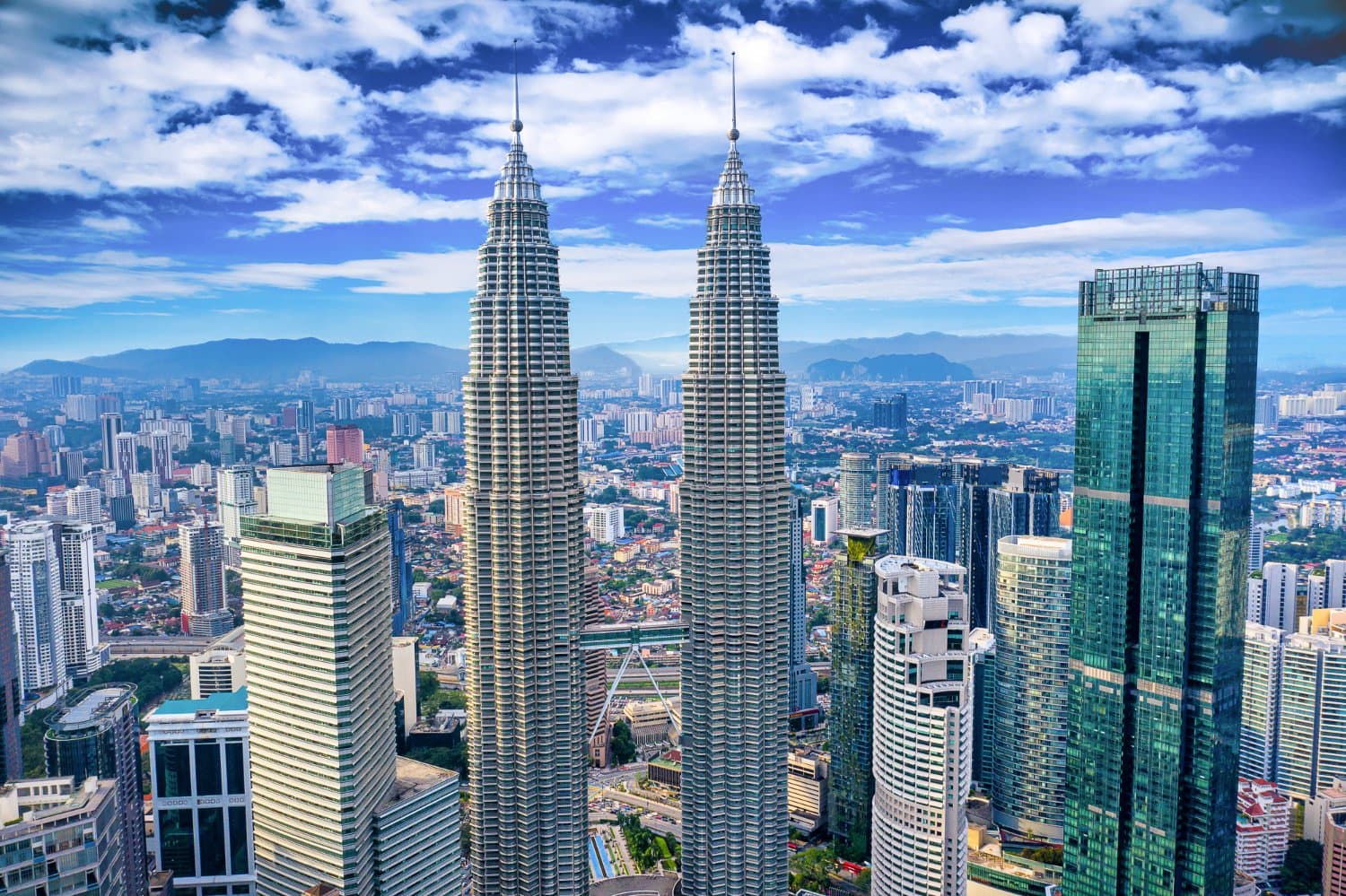
4. Malaysia
Malaysia remains one of Asia’s most practical and understated expat destinations. While it may not generate the same headlines as some neighbouring countries, it consistently ranks among the best Asian countries for expats due to its stability and accessibility.
Affordable Living with Familiar Comforts
Malaysia offers a comfortable and predictable cost of living, particularly in Kuala Lumpur and Penang. Most expats find they can maintain a high standard of living on £1,100–£1,600 per month ($1,375–$2,000), benefiting from modern housing, reliable utilities and affordable transport.
Typical monthly costs include:
Modern one-bedroom apartments from £400–£700 ($500–$875)
Low utility and mobile costs relative to Western standards
Affordable private healthcare and insurance options
From a financial planning standpoint, Malaysia’s cost structure supports consistency, making it easier for expats to budget, save and invest with confidence.
English Fluency and Ease of Integration
One of Malaysia’s most compelling advantages is the widespread use of English. For many expats, this significantly reduces the cultural and administrative friction often experienced elsewhere in Asia.
This ease of communication:
Simplifies banking, legal and healthcare interactions
Reduces reliance on intermediaries or translators
Accelerates professional and social integration
For first-time expats or those relocating with families, this familiarity can make Malaysia a particularly attractive and low-stress option.
Strong Infrastructure and Healthcare Access
Malaysia benefits from well-developed infrastructure, especially in urban centres. Public transport, road networks and digital connectivity are reliable, and the private healthcare system offers excellent value for money.
Many expats choose private healthcare packages costing significantly less than equivalent coverage in the UK or US, while still providing access to high-quality facilities and English-speaking medical professionals. This balance of affordability and quality contributes positively to overall financial security.
Long-Term Residency, Nomad Visas and Tax
Malaysia's Malaysia My Second Home (MM2H) programme remains a draw for longer-term residency, and the DE Rantau nomad pass targets remote workers. Both can offer favourable treatment of foreign-sourced income, but criteria evolve, understand how foreign income is treated, align residency with your tax strategy, and review investment structures before relocating.
Comparing it with Vietnam? See Vietnam vs Malaysia for UK retirees.
5. Philippines
The Philippines continues to stand out among the best Asian countries for expats for one key reason: people. Combined with low living costs and widespread English fluency, the country offers a welcoming and socially rich environment that many expats find easy to call home.

Low Living Costs with Everyday Comfort
Living costs in the Philippines remain highly competitive, particularly outside of central Manila. Many expats report a comfortable monthly budget of £900–£1,300 ($1,125–$1,625), with particularly strong value in housing and daily services.
Common expenses include:
One-bedroom apartments in cities such as Cebu or Davao from £300–£550 ($375–$690)
Inexpensive local transport and ride-hailing services
Affordable dining, with a mix of local and international options
For expats earning in sterling or US dollars, this affordability creates meaningful financial headroom, supporting both savings and lifestyle enjoyment.
English Fluency and Cultural Ease
English is an official language in the Philippines and is widely used in business, education and healthcare. This dramatically lowers the barrier to entry for UK and US expats and simplifies daily life.
As a result:
Administrative tasks are easier to manage independently
Healthcare interactions are clearer and more efficient
Social integration often happens more quickly
For many expats, this ease of communication reduces relocation stress and shortens the adjustment period significantly.
Strong Community and Social Connection
The Philippines is often described as one of the most socially engaging expat destinations in Asia. Local culture places a strong emphasis on family, hospitality and community, which frequently translates into warm and lasting relationships for expats.
Well-established expat communities offer:
Support networks for newcomers
Social events and professional meetups
Practical advice on settling in
This sense of belonging plays an important role in long-term satisfaction, particularly for retirees or solo expats.
Infrastructure and Healthcare Considerations
Infrastructure quality varies significantly by region. Major urban areas such as Metro Manila and Cebu offer modern amenities, international hospitals and reliable internet, while more rural locations may require compromise.
From a planning perspective, expats should:
Choose location carefully based on healthcare access
Budget for private healthcare and insurance
Factor in travel time and logistics when selecting accommodation
These considerations are manageable with foresight and do not detract from the overall value proposition when approached strategically.
The country also runs the SRRV retirement visa, one of the more accessible retirement routes in the region. Torn between here and Vietnam? Read Vietnam vs Philippines for UK retirees.
6. India
India completes the list of the best Asian countries for expats in 2026, not because it suits everyone, but because for the right profile, it can offer exceptional professional and financial opportunity.

Very Low Cost of Living with High Variability
India consistently ranks among the world’s lowest-cost countries. Many expats live comfortably on £700–£1,100 per month ($875–$1,375), particularly when housing and transport are structured efficiently.
Typical cost features include:
One-bedroom apartments in cities such as Pune, Bengaluru or Hyderabad from £250–£500 ($310–$625)
Extremely low daily food and transport expenses
Affordable domestic services that significantly reduce day-to-day costs
However, costs vary sharply by city and lifestyle. Premium neighbourhoods and international-standard housing can increase expenses, reinforcing the importance of careful location selection.
Career-Led Opportunities
India is particularly attractive for expats working in technology, finance, consulting, education and multinational management roles. Cities such as Bengaluru, Mumbai and Gurgaon host major global firms and offer strong career progression for those with specialist skills.
For professionals employed locally or regionally:
Salaries can be competitive relative to living costs
Senior roles often include housing, transport or tax benefits
Career experience in India can enhance long-term earning potential
From a strategic standpoint, India can act as a career accelerator when aligned with broader financial planning objectives.
Cultural Depth and Adaptability
India offers an unmatched depth of culture, history and diversity, but this also means adjustment requires patience. Infrastructure, bureaucracy and daily logistics can feel intense, particularly in large cities.
Successful expats often share common traits:
Flexibility and openness to different systems
Willingness to learn local norms and expectations
Structured routines that reduce daily friction
Those who adapt tend to find the experience deeply rewarding, both personally and professionally.
Healthcare, Administration and Planning
Private healthcare in major Indian cities is of high quality and cost-effective by global standards, though access varies by region. Expats are advised to use private facilities and maintain appropriate insurance coverage.
Key planning considerations include:
Structuring income and tax residency carefully
Understanding local banking and compliance requirements
Seeking professional guidance early in the relocation process
With the right preparation, many of the perceived challenges become manageable and predictable.
The Premium Alternative: Singapore, Japan and the Safety-First Hubs
Not everyone optimises for cost. If your priorities are world-class safety, healthcare and infrastructure, Asia's high-income hubs deserve a place on your shortlist.
Singapore pairs an official-English environment with top-tier safety and healthcare and a powerful regional job market, at a cost of living several times higher than Vietnam or the Philippines.
Japan offers exceptional safety, transport and quality of life, with a lower cost than Singapore but a steeper language barrier outside major cities. These are best suited to high earners on strong local packages rather than remote workers stretching a foreign income.
If you want to see how a premium hub stacks up against a value base, our Vietnam vs Singapore for UK retirees comparison lays out the trade-offs.
Best Places to Live in Asia for English Speakers
If you would rather not battle a language barrier from day one, a few destinations make life dramatically easier. The Philippines and Singapore both have English as an official language, so everything from tenancy agreements to hospital visits happens in English. Malaysia and India use English widely in business, healthcare and government. Hong Kong is also strong on English in professional settings. Vietnam, Thailand and Indonesia are more moderate, English is common in expat districts, co-working spaces and international healthcare, but you will get more from daily life by learning some of the local language. For most English-first movers, Malaysia offers the best balance of affordability and easy communication, while the Philippines wins on sheer immersion and cost.
Best Cities to Live in Asia in 2026
Country choice sets your visa, tax and healthcare backdrop, but you actually live in a city and the right city can matter more than the country. A few that consistently earn expat praise in 2026:
Da Nang, Vietnam: beachfront living, fast internet and low costs; a nomad and semi-retiree favourite.
Ho Chi Minh City, Vietnam: energy, careers and the region's best value for a big city.
Chiang Mai, Thailand: the original digital-nomad hub; cheap, green and community-rich.
Kuala Lumpur, Malaysia: modern, English-friendly and well-connected.
Bangkok, Thailand: world-class healthcare, transport and international schools.
Singapore: the premium pick for safety, infrastructure and regional careers.
Three of the six sit in Vietnam's orbit, which is why we cover them in depth in our best cities in Vietnam for expats guide.
Quick Picks: Best Asian Country For…
Best for value: Vietnam, the strongest combination of low cost and liveability.
Best for digital nomads: Thailand (DTV visa) and Vietnam (fast internet, low overheads).
Best for retirees: Malaysia (MM2H) and the Philippines (SRRV) for accessible long-stay visas; Vietnam for cost.
Best for English speakers: Philippines, Malaysia and Singapore.
Best for families: Malaysia and Thailand for schools, healthcare and ease of settling in.
Best for careers: Singapore and India.
Best for safety and infrastructure: Singapore and Japan.
Choosing the Right Country for Your Financial Future
When advising expats, I always stress that cost of living is only part of the equation. Tax exposure, investment access, currency risk and long-term planning opportunities all matter just as much. The best Asian countries for expats are those that allow you to align lifestyle enjoyment with disciplined financial progress.
Vietnam stands out because it delivers exceptional value across all of these areas.
As an expat myself, I understand both the excitement and the complexity of working abroad. With the right planning and the right destination, Asia in 2026 offers not just adventure, but a genuine opportunity to build a brighter financial future.
If you are considering an international move, professional advice from expert financial planners such as Benjamin Sharvell IFA tailored to your circumstances can make a meaningful difference.
Get in touch with our team today and get a free consultation!
Frequently Asked Questions
1. What is the best Asian country to live in?
For most UK and US expats balancing cost, lifestyle and financial upside, Vietnam is the standout pick for 2026. If you weight safety and infrastructure above cost, Singapore or Japan may suit you better; for the easiest English-speaking transition, consider Malaysia or the Philippines.
2. What is the cheapest Asian country to live in?
India, Vietnam and the Philippines are among the most affordable, with comfortable single-person budgets often between £700 and £1,300 a month. India is typically the cheapest, though costs vary sharply by city.
3. Which Asian country is best for English speakers?
The Philippines and Singapore have English as an official language; Malaysia and India use it widely. These are the smoothest options if you would rather not rely on a translator for banking, healthcare and paperwork.
4. Which Asian country is easiest to get a long-stay visa in?
Thailand's DTV (five years, 180 days per entry) is one of the most flexible long-stay options for remote workers, while Malaysia's MM2H and the Philippines' SRRV are popular retirement routes. Vietnam offers easy 90-day e-visas but no dedicated retirement visa yet.
5. Is it safe to live in Asia as an expat?
Many Asian destinations rank highly for safety — Singapore and Japan are among the safest countries in the world, and Vietnam, Malaysia and Thailand are generally considered safe for expats. As anywhere, safety varies by city and neighbourhood, so research your specific area.
6. Do I still pay UK tax if I move to Asia?
It depends on your residency status and where your income arises — this is exactly the kind of thing to plan before you move. A cross-border adviser can help you structure pensions, investments and residency efficiently; start with our guidance for UK expats.